
Blog / Blog

Never Ignore These 9 Engine Noises If You Want To Live Happily!

Never Ignore These 9 Engine Noises If You Want To Live Happily!

Key Takeaways:

  • Your engine noise could be warning you of a bigger problem
  • Timing belt engine noise is often ignored but could lead to considerable engine damage.
  • Knocking sounds usually indicate low oil levels.
  • Hissing could be a sign of a coolant leak.
  • If you're unsure of what an engine noise means, bring your car in to get it checked out.

We all want to take care of our cars and keep them running smoothly for as long as possible. However, sometimes engine noises can be a warning sign that something is wrong. It's a matter of common sense that your engine shouldn't make any funny noises, so if it does, you should definitely take notice!

Cutter Mazda Waipahu, serving Waipahu, HI, is here to help you understand some of the different engine noises you might come across and what they could mean.

1. A hissing noise

Have you heard the hissing of a train as it moves away from the station? It's not pleasant, is it? Well, the same goes for your car engine. A hissing noise is often indicative of an engine coolant leak. Still, it can also be in the cooling system, the vacuum hoses, or the oil pan. When you first start your engine, a high-pitched squeak could also be a sign that your serpentine belt is on its last legs. In any case, without any delays, you must tend to the matter.

2. A knocking engine noise

Such a sound can signify a problem with the connecting rods or bearings. Worn-out piston rings can also cause engine knocking sound and damage to the valves. To distinguish this engine noise from others, listen for a metallic sound that changes in pitch as the engine speed increases. Now, you usually hear an engine knocking sound when the oil is low, so check your dipstick regularly.

3. A clicking noise

Low oil pressure or any other issue with the timing belt can cause an engine clicking noise. If you hear this noise, check your oil level, pressure, and timing belt condition. You can get help from a certified mechanic to check whether the timing belt needs to be replaced or if this issue arises from the timing belt and not something more significant.

4. A grinding engine noise

Usually, a grinding noise signifies that the metal of your engine or any internal component is rubbing against another metallic surface. Water pumps and alternators are more susceptible to such kinds of errors. On the other hand, we have damaged bearings or a loose rocker arm.

This noise could mean a problem with the starter motor or alternator. You don't need to be extra prudent to distinguish the components grinding against one another.

5. A rattling noise

You often hear this noise when you first turn on the engine in the morning. It generally lasts for 2-3 seconds. Problems in heat shield or exhaust system components can cause this sound. Some experts also say that a rattling noise can indicate an engine with low oil levels or an issue with the muffler.

6. A whining noise

Until now, you must have thought only humans whine, but your car engine can do the same. Whining noise is caused mainly by a slipping belt or low-power steering fluid. You can easily distinguish this engine noise from others, as it will increase with the car's acceleration.

Ignoring a whining engine noise for too long and pretending it's music to your ears can cause severe damage. So, if you don't want to end up walking on the road, get your car checked as soon as possible.

7. A booming sound

Suspension issues often lead to a booming sound which comes in the sequence of multiple "booms." Strut or shock in the suspension is mainly responsible for giving you control as you drive. A problem with these means you might have to change your shocks or struts.

Usually, something as small as a ball joint can also be the reason for this noise. It might not seem like a monumental problem, but if it's not tended to, it can lead to misalignment and, eventually, a flat tire.

8. A squeaking engine noise

Generally, you will hear different kinds of squeaking noises. One is slightly high-pitched and similar to the hissing noise we have already discussed (refer to point 1 for details), and the other is a rather low-pitched sound. A squeaking followed by grinding is usually a sign of brake damage. Suppose you think your brakes are wearing out. In that case, it's essential to get them replaced and fixed before they cause any irrevocable damage. Brakes are your first safety, and we suggest you never take such problems lightly.

9. A ticking noise

You must know how essential oil is for the engine, so experts suggest never to look over your oil change intervals. Depriving your engine of oil can cause a ticking noise. When a machine doesn't have enough oil, its moving parts start clumping against each other, causing this sound to occur. A ticking sound is never a good sign and must be addressed immediately.

10. An abnormal engine sound of any kind

An abnormal engine sound is never a good sign, whether it's ticking, clunking, grinding, or anything else. If you're hearing any noise that doesn't seem right, you should take your car to a mechanic and have them check it out. Ignoring an abnormal engine noise causes car owners more financial damage in the long run.

Man in field checking car's smoking engine, hood up, mountains in distance under cloudy sky.

Ending Note:

The information imparted through this blog must help you become more aware of the sounds your car engine can make and what they might mean. It's essential to never ignore these noises, as they could indicate a bigger problem with your car.

You can save time and money in the long run by being proactive and addressing any issues early on. Have you ever had to deal with an engine issue? If yes, we know just the right thing to do.

Cutter Mazda Waipahu, serving Waipahu, HI!

Our Mazda dealership is always happy to help our customers with their issues, whether engine knocking sound or oil running out. At Cutter Mazda Waipahu, serving Waipahu, HI, we know that a car is a big investment, and we want to help you keep your vehicle in the best condition. The next time you hear an unusual noise coming from your engine, bring it to our Mazda service center.
Schedule your service now.

Posted in:

Related Posts

Professional Brake Repair Services at Your Mazda Dealership

When you step on the brake pedal, you expect your Mazda to stop as quickly and smoothly as it's designed to. Unfortunately, aged or damaged parts can make braking slower, which makes an accident more likely. If you need a brake repair, your Mazda dealer can fix the problem for you. These are some of the signs that your brakes need repair. Signs You Need a Professional Brake Repair at Your Mazda Dealer Leaking Brake Fluid A car's braking system depends on force to quickly and efficiently bring the wheels to a stop. The force is provided by pressurized brake fluid that supplies the hydraulic power which enables the system to work. This fluid is carried through the system in rubber brake hoses and metal brake lines. Despite their high quality, these components can become damaged, and the fluid will leak out. If the brake fluid is leaking, you'll feel less response when you press down on the brake pedal. Your car will also take longer to stop than it should. It's very difficult for any driver to spot a leak as this fluid is thin and looks similar to cooking oil. If you suspect a leak, contact your Mazda dealer immediately so our expert technicians can trace the leak and seal it. Once this is done, your brakes will work normally again. High-Pitched Screeching Noises If you hear a loud screeching noise each time you brake, your brake pads have worn out, and you need a brake repair. The brake pads fit into the calipers, and the calipers clamp onto both sides of each wheel rotor when you hit the brakes. The pads have a friction-generating material covering that helps to quickly stop the rotors and bring your car to a halt. The material covering a pad slowly wears down, as the friction generated by the pad causes minute portions of the material to break off each time you apply the brakes. When a pad's covering drops to 1/4′′ thickness, it reveals a metal spike buried in the material. This spike will scratch against the rotor when you brake as a warning that the pads are worn. We can quickly replace the pads, the noise will stop, and your brakes will work more effectively. Overheated Brake Fluid As we've seen, the brake fluid is forced through the system under high pressure when you brake, and this pressure generates heat. Once you take your foot off the brake pedal, the pressure reduces, and the fluid cools again. If you're forced to ride your brakes, the brake fluid is kept under constant pressure. The temperature of the brake fluid will rise due to the pressure, and it can overheat. Overheating is more likely with older brake fluid due to its reduced heat resistance. You'll know your brake fluid is overheating as a nasty chemical stench will rise from the brakes. If the fluid gets hot enough, it will boil, releasing bubbles of gas into the braking system. These gas bubbles can block the flow of fluid, causing further brake issues. We solve this problem by bleeding the brakes to remove the bubbles and replacing the brake fluid. Glazed Brake Pads Riding your brakes can often be necessary if you're trapped in gridlock and inching forward at a snail's pace. If you frequently ride your brakes, this can cause damage to the brake pads and the rotors. Keeping your foot resting on the brake pedal when you move forces the brake pad and wheel rotor to continue to rub against each other and generates excessive wear on both components. The contrast rubbing action can turn a brake pad's surface smooth and glass-like, known as glazing. A glazed pad can't generate friction, and the lack of friction forces the caliper to grip harder than it should to force the wheel to stop. In addition, the rotor can develop an irregular surface due to contact with the brake pad. At your Mazda dealer, we can replace the glazed pads, and we can also resurface a damaged rotor if required. Uneven Rotor Surface A rotor surface is completely smooth as this allows a caliper to easily grab and hold it to stop it moving. If you sometimes feel a vibration through the brake pedal when you brake, one or more of the rotor surfaces could be uneven. The vibration is caused by a caliper clamping onto a part smooth, part irregular surface. One of the most common causes of this problem is dried adhesive on a rotor. If you jam on the brakes when your car is traveling at speed, increased heat is generated between the fast-moving rotor and the friction material on a brake pad. The excessive heat can cause some of the adhesives on the pad to liquefy and smear across the rotor. The adhesive will dry quickly but leaves an irregular surface behind it. When a caliper grabs this surface, you'll feel vibrations. Your Mazda dealer can fix this problem by resurfacing the rotor. Damaged Brake Booster The brake booster is part of the braking system and is positioned behind the pedal. When you step on the pedal, the booster increases the pressure you exert by 10x. This provides the required pressure without forcing you to do a leg press each time you brake. The booster uses a vacuum system to produce greater than human force. In time, the booster, like any other component, can become damaged. The vacuum system could develop a leak, and this prevents it from generating the necessary force. If you need to press down on the pedal much harder than you should, you need a brake repair ASAP. Our expert technicians will examine the booster and either repair it or replace it to fix this issue. Worn or damaged brakes make driving extremely dangerous, as you don't have full control of your Mazda's speed. We're experts at brake repair and have the knowledge and technology to quickly and efficiently repair any possible issue. Call our service department today at Cutter Mazda of Waipahu in Waipahu, HI.

The 2024 Mazda CX-50: Embracing Adventure with Style

When it comes to family vehicles, the most universally preferred body style tends to be an SUV. A crossover SUV like the 2024 Mazda CX-50 has the space and standard features that will make transporting your growing family a breeze. Learn all about the base model of the CX-50 today before you drop by your local dealership. The 2024 Mazda CX-50: Embracing Adventure with Style The 2024 Mazda CX-50 has eight trim levels, starting with the 2.5 S Select model. The base trim sets the tone for the rest of the model lineup with a perky 2.5-liter SKYACTIV-G four-cylinder engine with cylinder deactivation that produces 187 horsepower and 186 lb-ft of torque. This powertrain has an advanced direct injection fuel system, an aluminum alloy engine block, and a towing capacity of 2,000 lbs. The base model comes with a standard i-ACTIVE AWD system and Mazda selectable drive modes with Sport and Off-road functions. This crossover SUV also has SKYACTIV vehicle dynamics with G-vectoring control, a six-speed automatic transmission with an optional manual shift mode, and a Torsion beam rear suspension. Fuel Economy The CX-50 base model has a fuel tank capacity of 15.9 gallons. You can expect this crossover SUV to have a fuel economy of 24 MPG in the city and 30 MPG on the interstate. Dimensions The 2.5 S Select model has a 110.8-inch wheelbase. This crossover SUV is 185.8 inches long and 63.5 inches tall, including the shark fin antenna. When the side mirrors are folded in, the SUV is 72.9 inches wide; when the side mirrors are open, the vehicle is 80.8 inches wide. The minimum ground clearance for this model is 8.3 inches. The interior measurements of this compact crossover SUV include 41.7 inches of front legroom and 38.8 inches of rear legroom. This SUV has 39.1 inches of front headroom, 38.9 inches of rear headroom, 55.9 inches of front shoulder room, and 53.6 inches of back shoulder room. The passenger volume is 100.3 cubic feet. Cargo volume is 31.4 cubic feet with the seats up or 56.3 cubic feet with the seats down. Colors and Materials The basic paint color options for the 2.5 S Select model are Jet Black Mica and Ingot Blue Metallic. Drivers can upgrade to premium color selections such as Wind Chill Pearl, Sour Red Crystal Metallic, Polymetal Gray Metallic, and Machine Gray Metallic. The only interior color is Black leatherette seating material with Gray accents. Exterior The base model has 17-inch aluminum alloy wheels with all-season black tires, a temporary spare tire, and Black dual power outside mirrors with built-in LED turn indicators. This model has standard lighting features such as LED headlights, automatic headlights, LED daytime running lights, and high beam control. The 2.5 S Select trim comes with automatic rain-sensing windshield wipers, an intermittent rear window wiper with a washer, body-colored rear roof spoiler, rear privacy glass, and an AWD badge. This model also has dual exhaust outlet tips with a bright finish. Convenience Standard convenience features for the 2024 Mazda CX-50 base model are speed-sensitive power door locks, push-button start, a rearview mirror with manual day/night, an electronic parking brake, and a tilting-telescoping steering wheel column. This model also has an electronic parking brake, illuminated vanity visor mirrors, a rear window defogger, one-touch windows, and dual-zone automatic climate control with an integrated pollen filter. This Mazda model has ample storage space thanks to features like the center console with a tray and covered storage bin, front-row seatback pockets, door bottle holders, and a rear center armrest with storage. This crossover also has an overhead storage console with an LED lamp and sunglasses holder. Seats The 2024 Mazda CX-50 2.5 S Select trim can seat up to five passengers. This model has a six-way manually adjustable driver's seat, a four-way manually adjustable passenger's seat, adjustable headrests, and a rear seat with a 60.40 remote fold-down feature. This model also has carpeted floor mats, a leather steering wheel, and a leather gear selector knob. Infotainment Mazda vehicles always have the most cutting-edge standard infotainment features. The base CX-50 has a 10.25-inch color display, an eight-speaker sound system, and steering wheel-mounted controls for cruise control, phone, and audio functions. This model supports integration with Android Auto and wireless Apple CarPlay. Bluetooth hands-free phone and audio streaming are also standard. Along with the robust infotainment system, the 2.5 S Select model also comes with a multi-function commander control, a voice command infotainment system, HD radio, integrated Pandora radio, and SMS text message audio features. The base trim even has a three-year Mazda Connected Services trial and an E911 automatic emergency notification. Safety Standard safety features for the base model include dual front airbags, front-row knee airbags, and front seat belt pre-tensioners with built-in force limiters. This model has an anti-lock brake system with brake assist, brakeforce distribution, and forward smart brake support. Dynamic stability control and traction control both fortify the handling of this crossover SUV. The 2.5 S Select model comes with advanced driver assistance features such as Mazda radar cruise control with integrated stop-and-go, lane departure warning, lane-keep assist, rear cross-traffic alert, blind spot monitoring, hill launch assist, driver attention warning, and a rearview monitor. This model also has emergency lane keeping with road keep assist as a standard feature. Accessories and Packages The base model has several available packages and accessories to upgrade select parts of the vehicle. The Convenience Package adds a frameless HomeLink mirror and charging pad to the car, while the Accent Package introduces side rocker garnish and illuminated door sill plates. Other accessories include splash guards, a trailer hitch with a seven-pin harness, and a retractable cargo cover. Mazda also has various roof accessories, such as roof rack attachments and a roof tent for outdoor lovers. The base CX-50 trim is packed with standard features and advanced technology. This crossover SUV is a great option for growing families who love recreational activities. Reserve your Mazda CX-50 when you contact Cutter Mazda of Waipahu in Waipahu, HI today.

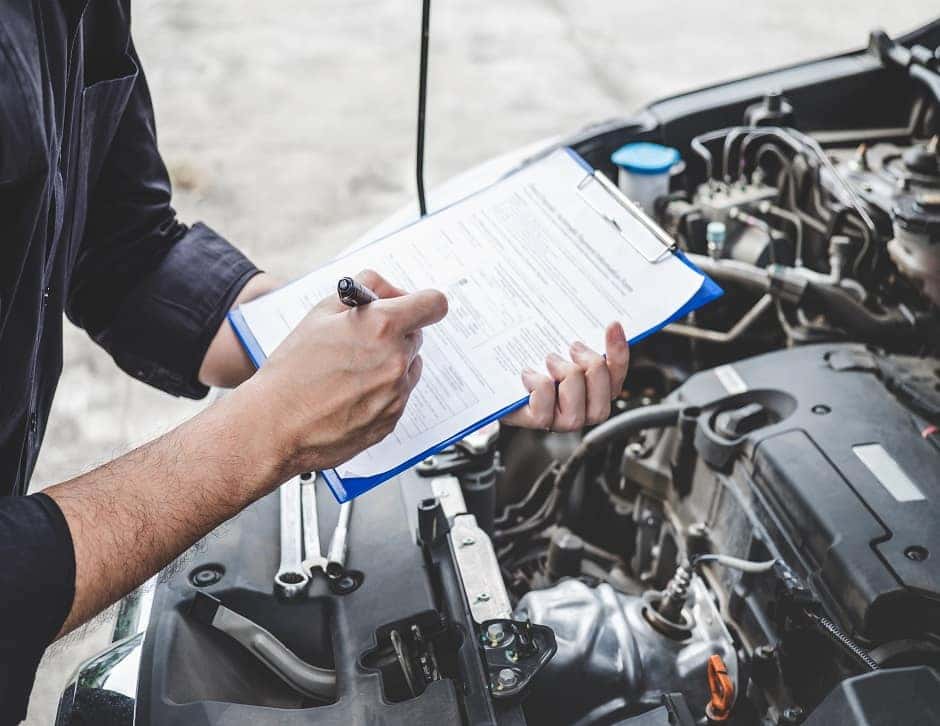
A mechanic writes on a clipboard with a pen above an open car hood.

5 Essential Mazda Maintenance Tasks You Should Never Skip

Key Takeaways: Regular Mazda maintenance is essential to keep your car running smoothly and extend its life. When you neglect routine maintenance, it can lead to costly repairs and safety hazards on the road. Regular oil changes, brake maintenance, tire rotation and alignment, air filter replacement, and battery maintenance are crucial maintenance tasks that you should never skip. Each task has specific recommended intervals and guidelines, which you can find in the car owner's manual. Staying on top of these maintenance tasks can save you money in the long run and help you avoid unexpected breakdowns or accidents. Regular Mazda maintenance is essential to keep your car running smoothly and to extend its life. If you neglect routine maintenance, you can spend a lot on repairs and even safety hazards on the road. At Cutter Mazda Waipahu in Waipahu, HI, we understand how important it is to keep your car running at peak performance. Our team of experts provides quality parts and personalized attention to ensure you get the most out of every ride. In this article, we will discuss five essential car maintenance tasks that you should never skip for your Mazda. These tasks include regular oil changes, brake maintenance, tire rotation and alignment, air filter replacement, and battery maintenance. By staying on top of these tasks, you can help ensure that your car remains in good condition and continues to perform at its best. Regular Oil Changes Your vehicle needs oil to keep it running smoothly, but the longer you drive without an oil change, the dirtier and unhealthier your engine becomes. Changing the engine oil in your vehicle is one of the most essential maintenance tasks you can do to keep your vehicle running smoothly. If you drive a Mazda, oil changes should be high on your maintenance list. We recommend checking in with our service pros to make sure your car is running at its best - they'll let you know how often it needs an oil change so that the miles keep rolling by! Mazda Brake Maintenance Brakes are crucial for your car's safety system, so regular maintenance is essential to keep them in good working condition. If you hear any unusual noises when you apply the brakes, or if the brakes feel spongy, it's time to get them checked out. Brake maintenance is essential for several reasons: Safety - the most important reason to maintain your brakes is to ensure your safety and the safety of your passengers. Faulty brakes can cause accidents, leading to severe injuries or even fatalities. Cost-effectiveness - regular brake maintenance can help prevent issues with your brakes, which can be costly to repair. If you fix even little problems early, you can save money in the long run. Longevity - proper brake maintenance can help prolong the life of your brakes, preventing premature wear and tear. Performance - maintaining your brakes can help ensure they function at their best, providing optimal performance and stopping power if you must. Peace of mind - knowing that your brakes are in good working condition can give you peace of mind, allowing you to drive without worrying about potential brake problems. Tire Rotation and Alignment Regular tire rotations and alignments help to ensure that your car handles well, improve fuel efficiency, and extend the life of your tires. Your car's owner's manual will provide specific recommendations for your vehicle. If you want them last, you should let your trusted specialist rotate them so they wear evenly. Worn-out tires are more likely to blow out, do not handle as well as they should, and pose a higher risk in inclement weather. When you replace your oil, you should also rotate your tires. Mazda Battery Maintenance Keep tabs on your car battery for any indication of abnormalities, like corrosion or leakage. It's always better to stay prepared than be caught off-guard by an unexpected dead battery; it could leave you stranded anywhere at any time. While changing your oil, check the voltage of your battery. If you detect a considerable decline in voltage, it may be time to change your batteries. It's a good idea to have it tested by a trusted mechanic such as Cutter Mazda of Waipahu in Waipahu, HI. Air Filter Replacement Maintaining a clean air filter is vital for keeping your vehicle in tip-top shape! As you drive around, particles can accumulate and clog up the filter. To keep your car running smoothly, it should be replaced every 12,000 to 15,000 miles - more often if you encounter dusty environments. It's vital to inspect the air filter each time an oil change takes place too; this keeps impurities from entering into engine systems where they don't belong. In Conclusion These are just a few of the many maintenance tasks you should do to keep your car running smoothly. Regular maintenance can save you money in the long run by preventing costly repairs and extending the life of your vehicle. A Trusted Source of Mazda Maintenance in Waipahu But how can you maintain your Mazda if you do not have any technicians to trust with? The solution to this problem is to come to our dealership here at Cutter Mazda of Waipahu. If you are in Waipahu, HI, or any neighboring areas, you are welcome to visit us, and we will help you to take good care of your car. Our crew of certified Mazda specialists is here to make sure every part in your car gets the best care possible with a genuine OEM replacement straight from the manufacturer! You can call us at 808-564-9560 or stop by our dealership at 94-245 Farrington Hwy, Waipahu, HI 96797. Be our valuable customers and experience the best service you deserve!