Blog / Blog

Radiator Fluids - Antifreeze & Coolant, What's The Difference?

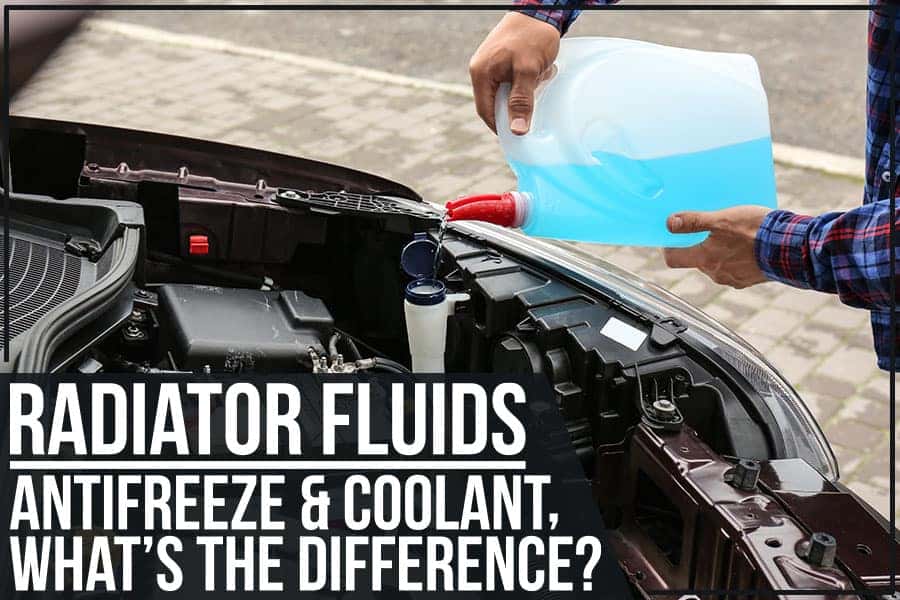
Fluid being poured from a bottle into a car's reservoir.

Key Takeaways:

  • Coolant & antifreeze are known as radiator fluids.
  • Coolant is the diluted additive mixture; antifreeze is the additive.
  • Both fluids are designed to keep a car's engine cool when running.
  • An engine cannot run without a coolant antifreeze mixture.
  • Radiator fluids call for regular maintenance to prevent engine damage.

Being the power source for running a car, car engines tend to reach extremely high temperatures. That heat has to be removed from the engine, which is why specialized radiator fluids, water pumps, fins & fans are used in an elaborate cooling system. These fluids are so essential that if one were a mechanic, one would understand how critical things must be for a metal-fire-and-fuel contraption to fail on the road.

Basic human anatomy - we need blood, water & sweat to work out our body's cooling system. A car needs fluids like a coolant & an antifreeze to facilitate the dissipation of heat the engine produces when running. And don't even think that the car's HVAC, which vents cool air to the cockpit for human passengers, is cooling the engine too - it's the opposite. The more AC you use, the hotter everything under the hood gets.

So, before you wonder, 'how far can a car run without coolant or an antifreeze?', we'll get down to the details that matter to your Mazda!

Also, the answer is 2-5minutes before permanent car engine damage.

Coolant

As the name suggests, the liquid is an aqueous solution comprising some chemical additives & antifreeze. Generally, most car coolants are a mixture of glycols & water, but they all do the same thing - keep that engine cool. They come pre-diluted as specialized blends across dedicated dealerships.

Antifreeze

Pretty straightforward - it is the class of chemical additive(s) that are diluted in water to create a coolant. The chemicals effectively decrease the freezing point of water, have rust inhibitors, and come in various colors, defining their technology.

The only caveat is that they slightly reduce the heat-carrying property of the coolant. That's why various other chemical additives are there - to balance out & enhance the antifreeze.

They come in two base variants - ethylene glycol & propylene glycol - and both have degrees of toxicity, mandating handling care.

Why Not Just Use Water?

Although water has excellent heat carrying ability & is an ideal coolant, it tends to react & rust the inside of radiators - water oxidizes certain metals. And if you live in colder regions, the water can freeze & rupture radiator lines.

Even worse, if the climate is too hot, the engine-heated water can convert to steam and blow up the radiator.

Where Do These Fluids Go?

The radiator is located behind the grille of your car. You need to open the car's hood to find a cap under your nose in the engine bay. That feeds the radiator reservoir, and the coolant & antifreeze mixture is poured into it to the brim.

A good practice is to top off the reservoir & let the car engine throttle for a bit to allow the fluids to circulate across the system - then top off again - till the levels stabilize.

How Hot Does an Engine Get?

Suppose you're still skeptical about using the correct coolant & antifreeze. In that case, we'll have you know that even in the winters, an engine can average 2000 degrees Fahrenheit. That number can easily touch 4500-5000 degrees inside a reinforced engine block in warmer climates. And a coolant keeps all that to a bare 265-465 degrees Fahrenheit at the engine's exteriors.

So, the next time a mechanic tells you your car's aluminum & plastic components melted in the engine bay, remember that aluminum melts around 1225 degrees Fahrenheit - and get your coolant checked!

Different Types of Antifreeze Technologies

Since we've established that antifreeze is different from a coolant in that it is an additive, we can now get to the various blends of radiator fluids used in cars.

You have to be careful & considerate about the coolant mixture you put into your car. The wrong coolant can more than cripple your engine!

For this reason, automakers & heat-transfer fluid specialists have developed blends for specific classes of vehicles. The FL22 is a popular Mazda coolant explicitly designed for extended use in the new cars in our inventory.

* Inorganic Acid Tech (IAT)

Known for its characteristic bright green hue, this blend contains silicates & phosphates that offer heightened protection for the radiator & engine metal surfaces while circulating across the cooling system. However, it usually lasts up to 30,000 miles before requiring a radiator flush.

* Organic Acid Tech (IAT)

It is a modern blend of orange & bright green antifreeze. The OAT does not have any silicates or phosphates to inhibit metal corrosion. That's because modern cars use versatile materials like nylon & aluminum in their radiators, and the OAT has been reformulated to protect them. On the plus point, the blend does offer a whopping 150,000 miles of cycle life before it's off for a flush.

* Hybrid Organic Acid Tech (HOAT)

This antifreeze combines the plus points of both IAT & OAT to deliver enhanced engine & radiator protection, plus the cycle life of 150,000 miles before a flush. It's available in hues of yellow & orange.

It would be wiser if you never attempted to concoct your coolant & antifreeze - consult your car owner's manual & have a professional secure the right blend for you.

What Happens With Radiator Fluid Misuse?

So much can go wrong with mismatched or self-concocted radiator fluid. Folks assume that a coolant is a 50-50 mix of water and antifreeze, then apply that principle in climates it is not suited to. That results in:

  • Extreme radiator & internal engine block corrosion.
  • Engine overheating & possible seizure
  • The meltdown of and damage to engine bay components
  • Pressure build-up & potential blow-out of the radiator
  • Crippled car cooling & HVAC systems

If you want to know more about how overheating can ruin a beautiful Mazda, be our guest & find out!

Mazda Coolant Maintenance Advice

Simply put, don't play chemist when it comes to radiator fluids like coolant & antifreeze blends. Regard your car owner's manual with diligence - they made the car and know what runs it optimally.

And, remember to flush your car's coolant when it's due for one. Using the wrong coolant is one side of the story, but using the correct coolant and not flushing it when it's all dirty & used up can lead to engine toxicity.

That means the coolant reservoir becomes a vat of acid and will eat away metal in the water pump, the lines, and even the channels within the engine made for the passage of the coolant.

Auto Servicing at Cutter Mazda Waipahu!

If this blog has got you at the edge of your seat, wondering what coolant & antifreeze blend you have in your car and when it was last flushed - you need to visit us!

At Cutter Mazda Waipahu, serving the lovely island, we know how hot it gets here and which coolant is best for your car. So, feel free to contact us for more information on auto service & specials. If your vehicle has been having overheating issues & murky coolant, we'll pop the hood and get right down to a flush-and-fix!
Schedule a radiator flushing service with us today!

Posted in:

Related Posts

Professional Brake Repair Services at Your Mazda Dealership

When you step on the brake pedal, you expect your Mazda to stop as quickly and smoothly as it's designed to. Unfortunately, aged or damaged parts can make braking slower, which makes an accident more likely. If you need a brake repair, your Mazda dealer can fix the problem for you. These are some of the signs that your brakes need repair. Signs You Need a Professional Brake Repair at Your Mazda Dealer Leaking Brake Fluid A car's braking system depends on force to quickly and efficiently bring the wheels to a stop. The force is provided by pressurized brake fluid that supplies the hydraulic power which enables the system to work. This fluid is carried through the system in rubber brake hoses and metal brake lines. Despite their high quality, these components can become damaged, and the fluid will leak out. If the brake fluid is leaking, you'll feel less response when you press down on the brake pedal. Your car will also take longer to stop than it should. It's very difficult for any driver to spot a leak as this fluid is thin and looks similar to cooking oil. If you suspect a leak, contact your Mazda dealer immediately so our expert technicians can trace the leak and seal it. Once this is done, your brakes will work normally again. High-Pitched Screeching Noises If you hear a loud screeching noise each time you brake, your brake pads have worn out, and you need a brake repair. The brake pads fit into the calipers, and the calipers clamp onto both sides of each wheel rotor when you hit the brakes. The pads have a friction-generating material covering that helps to quickly stop the rotors and bring your car to a halt. The material covering a pad slowly wears down, as the friction generated by the pad causes minute portions of the material to break off each time you apply the brakes. When a pad's covering drops to 1/4′′ thickness, it reveals a metal spike buried in the material. This spike will scratch against the rotor when you brake as a warning that the pads are worn. We can quickly replace the pads, the noise will stop, and your brakes will work more effectively. Overheated Brake Fluid As we've seen, the brake fluid is forced through the system under high pressure when you brake, and this pressure generates heat. Once you take your foot off the brake pedal, the pressure reduces, and the fluid cools again. If you're forced to ride your brakes, the brake fluid is kept under constant pressure. The temperature of the brake fluid will rise due to the pressure, and it can overheat. Overheating is more likely with older brake fluid due to its reduced heat resistance. You'll know your brake fluid is overheating as a nasty chemical stench will rise from the brakes. If the fluid gets hot enough, it will boil, releasing bubbles of gas into the braking system. These gas bubbles can block the flow of fluid, causing further brake issues. We solve this problem by bleeding the brakes to remove the bubbles and replacing the brake fluid. Glazed Brake Pads Riding your brakes can often be necessary if you're trapped in gridlock and inching forward at a snail's pace. If you frequently ride your brakes, this can cause damage to the brake pads and the rotors. Keeping your foot resting on the brake pedal when you move forces the brake pad and wheel rotor to continue to rub against each other and generates excessive wear on both components. The contrast rubbing action can turn a brake pad's surface smooth and glass-like, known as glazing. A glazed pad can't generate friction, and the lack of friction forces the caliper to grip harder than it should to force the wheel to stop. In addition, the rotor can develop an irregular surface due to contact with the brake pad. At your Mazda dealer, we can replace the glazed pads, and we can also resurface a damaged rotor if required. Uneven Rotor Surface A rotor surface is completely smooth as this allows a caliper to easily grab and hold it to stop it moving. If you sometimes feel a vibration through the brake pedal when you brake, one or more of the rotor surfaces could be uneven. The vibration is caused by a caliper clamping onto a part smooth, part irregular surface. One of the most common causes of this problem is dried adhesive on a rotor. If you jam on the brakes when your car is traveling at speed, increased heat is generated between the fast-moving rotor and the friction material on a brake pad. The excessive heat can cause some of the adhesives on the pad to liquefy and smear across the rotor. The adhesive will dry quickly but leaves an irregular surface behind it. When a caliper grabs this surface, you'll feel vibrations. Your Mazda dealer can fix this problem by resurfacing the rotor. Damaged Brake Booster The brake booster is part of the braking system and is positioned behind the pedal. When you step on the pedal, the booster increases the pressure you exert by 10x. This provides the required pressure without forcing you to do a leg press each time you brake. The booster uses a vacuum system to produce greater than human force. In time, the booster, like any other component, can become damaged. The vacuum system could develop a leak, and this prevents it from generating the necessary force. If you need to press down on the pedal much harder than you should, you need a brake repair ASAP. Our expert technicians will examine the booster and either repair it or replace it to fix this issue. Worn or damaged brakes make driving extremely dangerous, as you don't have full control of your Mazda's speed. We're experts at brake repair and have the knowledge and technology to quickly and efficiently repair any possible issue. Call our service department today at Cutter Mazda of Waipahu in Waipahu, HI.

The 2024 Mazda CX-50: Embracing Adventure with Style

When it comes to family vehicles, the most universally preferred body style tends to be an SUV. A crossover SUV like the 2024 Mazda CX-50 has the space and standard features that will make transporting your growing family a breeze. Learn all about the base model of the CX-50 today before you drop by your local dealership. The 2024 Mazda CX-50: Embracing Adventure with Style The 2024 Mazda CX-50 has eight trim levels, starting with the 2.5 S Select model. The base trim sets the tone for the rest of the model lineup with a perky 2.5-liter SKYACTIV-G four-cylinder engine with cylinder deactivation that produces 187 horsepower and 186 lb-ft of torque. This powertrain has an advanced direct injection fuel system, an aluminum alloy engine block, and a towing capacity of 2,000 lbs. The base model comes with a standard i-ACTIVE AWD system and Mazda selectable drive modes with Sport and Off-road functions. This crossover SUV also has SKYACTIV vehicle dynamics with G-vectoring control, a six-speed automatic transmission with an optional manual shift mode, and a Torsion beam rear suspension. Fuel Economy The CX-50 base model has a fuel tank capacity of 15.9 gallons. You can expect this crossover SUV to have a fuel economy of 24 MPG in the city and 30 MPG on the interstate. Dimensions The 2.5 S Select model has a 110.8-inch wheelbase. This crossover SUV is 185.8 inches long and 63.5 inches tall, including the shark fin antenna. When the side mirrors are folded in, the SUV is 72.9 inches wide; when the side mirrors are open, the vehicle is 80.8 inches wide. The minimum ground clearance for this model is 8.3 inches. The interior measurements of this compact crossover SUV include 41.7 inches of front legroom and 38.8 inches of rear legroom. This SUV has 39.1 inches of front headroom, 38.9 inches of rear headroom, 55.9 inches of front shoulder room, and 53.6 inches of back shoulder room. The passenger volume is 100.3 cubic feet. Cargo volume is 31.4 cubic feet with the seats up or 56.3 cubic feet with the seats down. Colors and Materials The basic paint color options for the 2.5 S Select model are Jet Black Mica and Ingot Blue Metallic. Drivers can upgrade to premium color selections such as Wind Chill Pearl, Sour Red Crystal Metallic, Polymetal Gray Metallic, and Machine Gray Metallic. The only interior color is Black leatherette seating material with Gray accents. Exterior The base model has 17-inch aluminum alloy wheels with all-season black tires, a temporary spare tire, and Black dual power outside mirrors with built-in LED turn indicators. This model has standard lighting features such as LED headlights, automatic headlights, LED daytime running lights, and high beam control. The 2.5 S Select trim comes with automatic rain-sensing windshield wipers, an intermittent rear window wiper with a washer, body-colored rear roof spoiler, rear privacy glass, and an AWD badge. This model also has dual exhaust outlet tips with a bright finish. Convenience Standard convenience features for the 2024 Mazda CX-50 base model are speed-sensitive power door locks, push-button start, a rearview mirror with manual day/night, an electronic parking brake, and a tilting-telescoping steering wheel column. This model also has an electronic parking brake, illuminated vanity visor mirrors, a rear window defogger, one-touch windows, and dual-zone automatic climate control with an integrated pollen filter. This Mazda model has ample storage space thanks to features like the center console with a tray and covered storage bin, front-row seatback pockets, door bottle holders, and a rear center armrest with storage. This crossover also has an overhead storage console with an LED lamp and sunglasses holder. Seats The 2024 Mazda CX-50 2.5 S Select trim can seat up to five passengers. This model has a six-way manually adjustable driver's seat, a four-way manually adjustable passenger's seat, adjustable headrests, and a rear seat with a 60.40 remote fold-down feature. This model also has carpeted floor mats, a leather steering wheel, and a leather gear selector knob. Infotainment Mazda vehicles always have the most cutting-edge standard infotainment features. The base CX-50 has a 10.25-inch color display, an eight-speaker sound system, and steering wheel-mounted controls for cruise control, phone, and audio functions. This model supports integration with Android Auto and wireless Apple CarPlay. Bluetooth hands-free phone and audio streaming are also standard. Along with the robust infotainment system, the 2.5 S Select model also comes with a multi-function commander control, a voice command infotainment system, HD radio, integrated Pandora radio, and SMS text message audio features. The base trim even has a three-year Mazda Connected Services trial and an E911 automatic emergency notification. Safety Standard safety features for the base model include dual front airbags, front-row knee airbags, and front seat belt pre-tensioners with built-in force limiters. This model has an anti-lock brake system with brake assist, brakeforce distribution, and forward smart brake support. Dynamic stability control and traction control both fortify the handling of this crossover SUV. The 2.5 S Select model comes with advanced driver assistance features such as Mazda radar cruise control with integrated stop-and-go, lane departure warning, lane-keep assist, rear cross-traffic alert, blind spot monitoring, hill launch assist, driver attention warning, and a rearview monitor. This model also has emergency lane keeping with road keep assist as a standard feature. Accessories and Packages The base model has several available packages and accessories to upgrade select parts of the vehicle. The Convenience Package adds a frameless HomeLink mirror and charging pad to the car, while the Accent Package introduces side rocker garnish and illuminated door sill plates. Other accessories include splash guards, a trailer hitch with a seven-pin harness, and a retractable cargo cover. Mazda also has various roof accessories, such as roof rack attachments and a roof tent for outdoor lovers. The base CX-50 trim is packed with standard features and advanced technology. This crossover SUV is a great option for growing families who love recreational activities. Reserve your Mazda CX-50 when you contact Cutter Mazda of Waipahu in Waipahu, HI today.

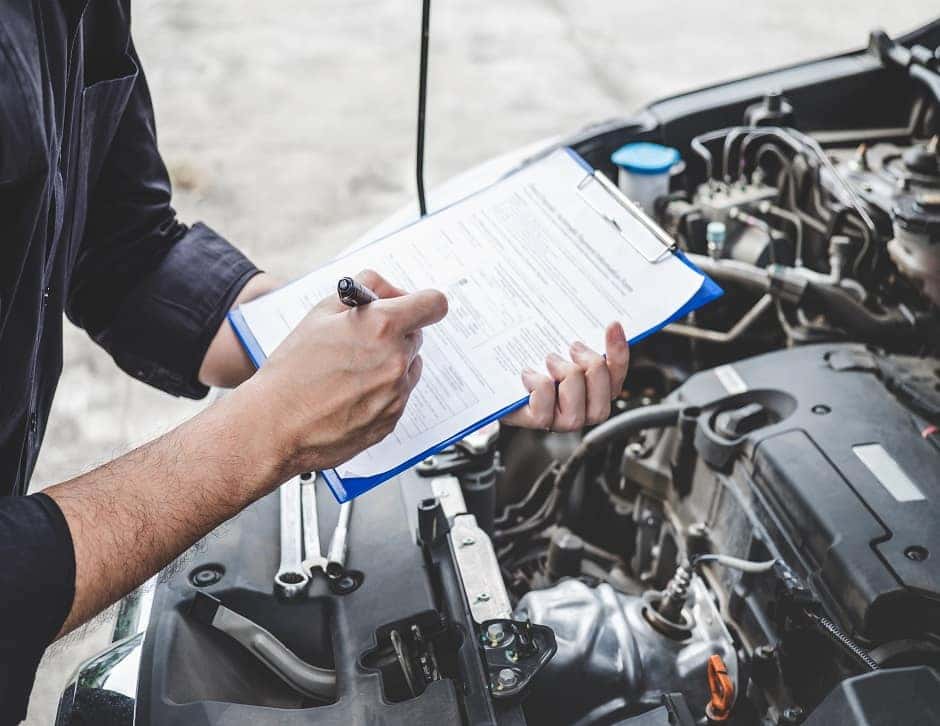
A mechanic writes on a clipboard with a pen above an open car hood.

5 Essential Mazda Maintenance Tasks You Should Never Skip

Key Takeaways: Regular Mazda maintenance is essential to keep your car running smoothly and extend its life. When you neglect routine maintenance, it can lead to costly repairs and safety hazards on the road. Regular oil changes, brake maintenance, tire rotation and alignment, air filter replacement, and battery maintenance are crucial maintenance tasks that you should never skip. Each task has specific recommended intervals and guidelines, which you can find in the car owner's manual. Staying on top of these maintenance tasks can save you money in the long run and help you avoid unexpected breakdowns or accidents. Regular Mazda maintenance is essential to keep your car running smoothly and to extend its life. If you neglect routine maintenance, you can spend a lot on repairs and even safety hazards on the road. At Cutter Mazda Waipahu in Waipahu, HI, we understand how important it is to keep your car running at peak performance. Our team of experts provides quality parts and personalized attention to ensure you get the most out of every ride. In this article, we will discuss five essential car maintenance tasks that you should never skip for your Mazda. These tasks include regular oil changes, brake maintenance, tire rotation and alignment, air filter replacement, and battery maintenance. By staying on top of these tasks, you can help ensure that your car remains in good condition and continues to perform at its best. Regular Oil Changes Your vehicle needs oil to keep it running smoothly, but the longer you drive without an oil change, the dirtier and unhealthier your engine becomes. Changing the engine oil in your vehicle is one of the most essential maintenance tasks you can do to keep your vehicle running smoothly. If you drive a Mazda, oil changes should be high on your maintenance list. We recommend checking in with our service pros to make sure your car is running at its best - they'll let you know how often it needs an oil change so that the miles keep rolling by! Mazda Brake Maintenance Brakes are crucial for your car's safety system, so regular maintenance is essential to keep them in good working condition. If you hear any unusual noises when you apply the brakes, or if the brakes feel spongy, it's time to get them checked out. Brake maintenance is essential for several reasons: Safety - the most important reason to maintain your brakes is to ensure your safety and the safety of your passengers. Faulty brakes can cause accidents, leading to severe injuries or even fatalities. Cost-effectiveness - regular brake maintenance can help prevent issues with your brakes, which can be costly to repair. If you fix even little problems early, you can save money in the long run. Longevity - proper brake maintenance can help prolong the life of your brakes, preventing premature wear and tear. Performance - maintaining your brakes can help ensure they function at their best, providing optimal performance and stopping power if you must. Peace of mind - knowing that your brakes are in good working condition can give you peace of mind, allowing you to drive without worrying about potential brake problems. Tire Rotation and Alignment Regular tire rotations and alignments help to ensure that your car handles well, improve fuel efficiency, and extend the life of your tires. Your car's owner's manual will provide specific recommendations for your vehicle. If you want them last, you should let your trusted specialist rotate them so they wear evenly. Worn-out tires are more likely to blow out, do not handle as well as they should, and pose a higher risk in inclement weather. When you replace your oil, you should also rotate your tires. Mazda Battery Maintenance Keep tabs on your car battery for any indication of abnormalities, like corrosion or leakage. It's always better to stay prepared than be caught off-guard by an unexpected dead battery; it could leave you stranded anywhere at any time. While changing your oil, check the voltage of your battery. If you detect a considerable decline in voltage, it may be time to change your batteries. It's a good idea to have it tested by a trusted mechanic such as Cutter Mazda of Waipahu in Waipahu, HI. Air Filter Replacement Maintaining a clean air filter is vital for keeping your vehicle in tip-top shape! As you drive around, particles can accumulate and clog up the filter. To keep your car running smoothly, it should be replaced every 12,000 to 15,000 miles - more often if you encounter dusty environments. It's vital to inspect the air filter each time an oil change takes place too; this keeps impurities from entering into engine systems where they don't belong. In Conclusion These are just a few of the many maintenance tasks you should do to keep your car running smoothly. Regular maintenance can save you money in the long run by preventing costly repairs and extending the life of your vehicle. A Trusted Source of Mazda Maintenance in Waipahu But how can you maintain your Mazda if you do not have any technicians to trust with? The solution to this problem is to come to our dealership here at Cutter Mazda of Waipahu. If you are in Waipahu, HI, or any neighboring areas, you are welcome to visit us, and we will help you to take good care of your car. Our crew of certified Mazda specialists is here to make sure every part in your car gets the best care possible with a genuine OEM replacement straight from the manufacturer! You can call us at 808-564-9560 or stop by our dealership at 94-245 Farrington Hwy, Waipahu, HI 96797. Be our valuable customers and experience the best service you deserve!