Blog

The Benefits of Buying a Certified Pre-Owned Car

Key Takeaways:

  • Certified pre-owned cars offer a middle ground between new and used vehicles.
  • Enjoy the assurance of a thorough inspection and reconditioning process.
  • Benefits include extended warranties, roadside assistance, and more.
  • Lower depreciation and reduced insurance costs contribute to long-term savings.
  • Access to modern features and advanced technology without the new car price.
  • Leverage the option to finance a certified pre-owned car at competitive rates.
  • Research the manufacturer's certification criteria to ensure quality and reliability.
  • Consult a dealership for personalized advice and explore available options.
  • Choosing a certified pre-owned car can offer peace of mind and value.

When it comes to buying a car, there's a choice to be made between new and used. However, there's a third option that combines the best of both worlds: certified pre-owned cars . If you're seeking a vehicle that balances value, quality, and affordability, then you should consider a certified pre-owned car. In this article, we'll delve into the advantages of opting for a certified pre-owned (CPO) vehicle and why it could be the perfect choice for your next automotive investment.

Ready to buy your dream car? Cutter Mazda of Waipahu is your trusted partner, offering a range of certified pre-owned vehicles to meet your preferences and needs.

The Middle Ground between New and Used

Certified pre-owned cars represent a smart compromise between the allure of a brand-new vehicle and the cost savings of a used one. They offer you the opportunity to drive a car that's been meticulously inspected and reconditioned to meet manufacturer standards, yet at a more budget-friendly price point than a brand-new model. This middle ground allows you to enjoy the best of both worlds - the satisfaction of owning a quality vehicle without the substantial depreciation that occurs with a new car purchase.

Thorough Inspection and Reconditioning Process

One of the standout benefits of certified pre-owned cars is the assurance of quality that comes with them. To earn the "certified" designation, these vehicles undergo a comprehensive inspection and reconditioning process conducted by manufacturer-certified technicians. This process ensures that the car meets specific mechanical, cosmetic, and safety standards. Any necessary repairs or replacements are carried out to restore the car's optimal condition. This meticulous attention to detail guarantees that you're driving a vehicle that's been thoroughly evaluated and improved, providing you with added confidence in your purchase.

Extended Warranties and Additional Benefits

Certified pre-owned cars often come with extended warranties, which provide valuable coverage beyond the typical warranty period. That coverage can include essential components like the engine, transmission, and drivetrain. Additionally, many manufacturers offer roadside assistance as part of their certified pre-owned programs, providing you with a safety net in case of unexpected breakdowns. These extended warranties and added benefits contribute to your peace of mind, knowing that you're protected and supported throughout your ownership experience.

Long-Term Savings: Depreciation and Insurance

One of the most significant financial advantages of choosing a certified pre-owned car is avoiding the steep initial depreciation that new cars experience. New cars can lose a significant portion of their value within the first few years, while certified pre-owned cars have already undergone this depreciation. This difference translates to lower overall depreciation costs for you. Additionally, insurance premiums are often lower for certified pre-owned cars compared to new ones, leading to ongoing savings in your budget.

Access to Modern Features and Technology

Opting for a certified pre-owned car doesn't mean sacrificing modern features and technology. Many certified pre-owned vehicles are relatively recent models that still offer advanced technology, safety features, and amenities. That means you can enjoy the convenience of features like infotainment systems, navigation, driver assistance technologies, and more without paying the premium associated with a new car. As a result, you're getting a vehicle with up-to-date features and a range of options that enhance your driving experience.

Competitive Financing Options

Financing a certified pre-owned car often comes with competitive interest rates and terms. Many dealerships and manufacturers offer special financing rates for certified pre-owned vehicles, making ownership even more affordable. That can be particularly advantageous if you're seeking a reliable and well-maintained vehicle with favorable financing conditions. You can secure a payment plan that aligns with your budget and financial goals by exploring your financing options.

Essential Note: Consulting a Dealership for Expert Advice

Navigating the realm of certified pre-owned cars can be made easier by consulting with a reputable dealership. Experienced sales representatives can provide personalized advice tailored to your preferences, needs, and budget. They can guide you through the available certified pre-owned inventory, explain the benefits of each model, and assist in finding the right fit for your lifestyle. Leveraging their expertise, you can make an informed decision and feel confident in your choice of a certified pre-owned car.

A Decision that Offers Value and Peace of Mind

The choice to purchase a certified pre-owned car is a decision that combines value and peace of mind. By gaining access to a meticulously inspected vehicle with extended warranties and modern features, you're investing in your driving experience and financial well-being. The assurance of quality, lower depreciation costs, and competitive financing options further enhance the appeal of certified pre-owned cars.

Elevate Your Driving Experience with Certified Pre-Owned Cars

Purchasing a certified pre-owned car elevates the car-buying experience to a new level of quality and affordability. With the assurance of thorough inspections, extended warranties, and modern features, you're investing in a vehicle that delivers exceptional value. The benefits of lower depreciation, reduced insurance costs, and competitive financing options contribute to long-term savings and financial confidence.

As you explore the world of certified pre-owned cars, Cutter Mazda of Waipahu stands ready to assist you in finding the ideal vehicle that aligns with your preferences and provides a driving experience that's both rewarding and fulfilling. Visit Cutter Mazda of Waipahu today and embark on your journey towards driving a certified pre-owned car with pride and satisfaction.
Recommended Posts

CX-50 Hybrid Range for Weekend Driving Across Oahu

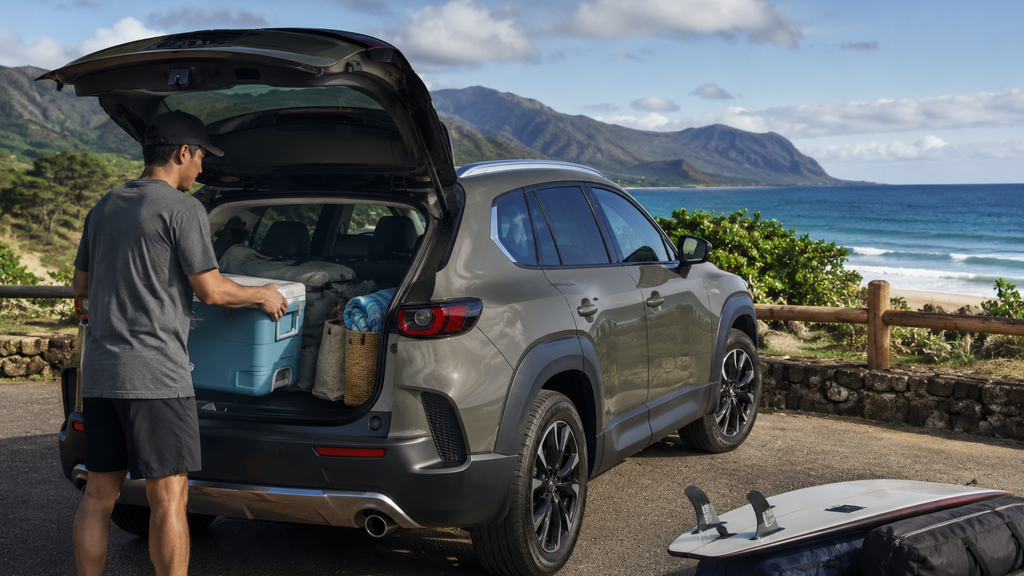
CX-50 Hybrid range can support several Oahu weekend trips before fuel becomes part of the plan. Mazda lists an EPA estimated 551 mile total range for the 2026 CX-50 Hybrid. However, that number gives useful scale, but it is not a fixed promise for every trip. Traffic, speed, passenger load, hills, and climate control can change fuel use. Therefore, island trip planning works best when you treat the estimate as a guide. The more useful question is how that range fits your usual stops, gear, and route. What the CX-50 Hybrid Range Figure Means The published range combines fuel economy with the amount of fuel the CX-50 Hybrid can carry. Mazda lists 39 MPG city, 37 MPG highway, and 38 MPG combined for the 2026 model. Additionally, those figures come from standardized EPA testing. Therefore, they give shoppers a common reference point across different vehicles. What does 551 miles mean for an Oahu weekend? It means one tank has far more projected distance than most single island outings require. Still, a day across Waipahu, Honolulu, the North Shore, and several stops covers only part of that estimate. more However, personal results can move above or below the published number. Faster highway travel can use fuel differently from slower traffic. Moreover, added passengers and cargo increase the energy needed to move the CX-50 Hybrid. In addition, air conditioning adds another demand on the powertrain. For this reason, think of the range figure as planning room. It can show how many short outings may fit between fill ups. It should not become a target you try to reach before stopping for fuel. How Hybrid Operation Changes Across an Oahu Route The CX-50 Hybrid combines a 2.5 liter gasoline engine with three electric motors and a hybrid battery. An eCVT manages how the engine and motors share propulsion. Because power demand changes throughout a trip, the mix can change from one road segment to another. Why can fuel use change between traffic and faster roads? Lower speed travel can give the electric side more chances to assist propulsion. Braking can also send some energy back toward the hybrid battery. At higher speeds, the gasoline engine may carry more of the load. That does not require the driver to manage the handoff. The CX-50 Hybrid controls the mix while you drive. Therefore, the useful task is watching your route and fuel level, not trying to force one type of propulsion. Oahu makes that easy to visualize. A weekend drive may begin with slower streets near Waipahu, move onto H-1, then return to local roads. Each section asks for a different amount of power. As a result, your trip may not match one simple city or highway number. Furthermore, the eCVT keeps power delivery smooth as demand rises or falls. Instead of fixed gear changes, it can vary the ratio continuously. That supports steady acceleration when traffic opens and lower power demand when speeds settle. Is the CX-50 Hybrid Range Enough for Weekend Oahu Driving? The 551 mile EPA estimate gives drivers far more projected distance than a typical single island outing requires. Oahu is compact enough that most weekend routes cover a fraction of that number. Therefore, fuel planning becomes more about reserve and convenience than reaching a distant station. For this reason, plan around the trip you intend to take. Add the main destination, extra stops, and the return route. Then leave room for detours, traffic changes, and another short errand. A few planning habits keep the range number useful: Start with the fuel level you already have instead of assuming a full tank. That gives your route estimate a more realistic starting point. Add extra distance for side trips, missed turns, or an unplanned stop. That keeps your fuel reserve from shrinking too far. Watch the vehicle range display as the weekend develops. Use it as one reference alongside the fuel gauge and your planned route. Because Oahu trips can involve several short drives in one day, repeated starts and stops also matter. A beach visit, meal stop, shopping trip, and return home may create several separate drive cycles. Therefore, think about the whole weekend instead of one destination. How Much Weekend Gear Fits in the CX-50 Hybrid? Cargo fit comes from rear storage volume, seat position, and the shape of the items you bring. Current specifications list about 29.2 cubic feet behind the rear seats. That gives the CX-50 Hybrid room for bags, coolers, beach items, and other weekend gear. How does cargo change trip planning? Consequently, more weight asks the powertrain to move a heavier load. The change may be small for a few bags. However, several passengers plus a full cargo area can shift your personal fuel results. In addition, the rear seat layout matters. Folding part of the second row can open more length for larger items. In addition, keeping one seat upright can preserve space for a passenger beside longer gear. Before a weekend trip, think through the load in the order you will use it: Put heavier items low and close to the seatbacks. That keeps the load stable and leaves smaller items easier to reach. Keep frequently needed bags near the hatch opening. You can reach them without unloading the entire cargo area. Check rear visibility before leaving. Tall cargo should not block the view more than necessary. Therefore, the best cargo check happens before you need the space. Bring a cooler, suitcase, stroller, or beach bag during a showroom visit. That shows how your own gear fits better than a volume number alone. What eAWD and Drive Modes Add to Weekend Routes The CX-50 Hybrid uses electronic AWD with electric power available at the rear axle. That setup can send power where the drivetrain needs it without a mechanical driveshaft running front to rear. As a result, the hybrid arrangement still powers all four wheels. What does that add during an Oahu weekend? Wet pavement, sloped access roads, and uneven parking areas can ask for more traction. Electronic AWD can respond as grip changes. Therefore, it adds another layer of control without asking you to manage front and rear power yourself. Mi Drive also includes Power Mode and Trail Mode. Power Mode sharpens response when you want quicker acceleration. Trail Mode adjusts power delivery for loose or uneven surfaces. Each setting changes how the CX-50 Hybrid responds to a specific driving task. Still, those modes are not required for every trip. Instead, they give you more control over how the CX-50 Hybrid responds when the route changes. A paved beach lot, a steeper road, or a quick merge may call for different inputs. Before choosing the CX-50 Hybrid, test the features that match your own weekend plans. Try a highway merge, a hill, a slower turn, and a rougher parking surface if available. Also check cargo access and rear seating with the people or gear you carry most. CX-50 Hybrid range gives Oahu drivers generous planning room for weekend travel. The stronger decision comes from looking at range, cargo, passenger load, route type, and traction together. When those pieces fit your routine, the hybrid can support long days around the island with fewer fuel stops.

Mazda3 Sedan Daily Driving Around Waipahu and Oahu

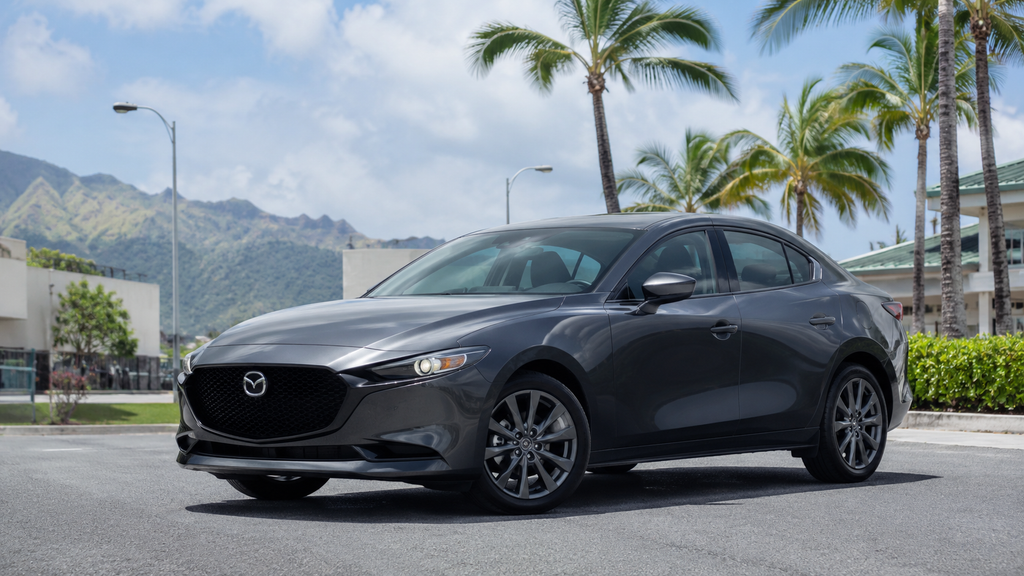
Mazda3 Sedan daily driving around Waipahu can combine compact sizing, supportive seating, and a traditional trunk for everyday routines. In addition, the sedan keeps controls close and places the driver low enough to feel connected to the road. That layout can matter when your week includes traffic, parking lots, errands, and regular passenger trips. Therefore, a useful test drive should look beyond trim names and focus on how the car fits your routine. How the Mazda3 Sedan Driving Position Fits a Daily Commute Mazda places strong emphasis on seat position, steering reach, and pedal placement. Together, those elements shape how naturally your body moves during a drive. Because commuting repeats the same motions, a comfortable setup can reduce the need for constant repositioning. Why does driving position matter on a normal trip? Your shoulders, hips, knees, and hands all work together while steering and braking. A seat that sits too far back can stretch your arms. A seat that sits too close can crowd your knees. Therefore, the goal is a position that keeps your joints relaxed while controls remain easy to reach. more The Mazda3 Sedan also places the steering wheel and primary controls within a compact cockpit. In addition, the low dashboard can support a clear view ahead. Set the seat first, then adjust the wheel and mirrors. That order gives you a better sense of whether the cabin fits your body. During a Waipahu commute, pay attention to how your posture feels after several turns and stops. Furthermore, notice whether you can use the pedals without lifting your heel. Small details like these matter more after repeated trips than during a brief showroom sit. Is the Mazda3 Sedan Easy to Park Around Waipahu? Its compact body and clear front placement support controlled low speed maneuvering in tighter spaces. The sedan shape also gives you a defined trunk behind the rear seats. However, the rear deck may not sit within your direct sightline from the driver seat. How easy is it to judge the back of the car? The answer comes from mirrors, the rear camera, and your sense of distance. Therefore, try a normal parking space before testing a tighter one. Notice how much steering input the car needs and how quickly the nose changes direction. Rear Cross Traffic Alert can add another layer of awareness while backing from a space. The feature watches for traffic moving behind the car and can provide a warning. In addition, the rear camera gives you a direct view of the area behind the bumper. A parking test should also include backing beside larger SUVs or trucks. Their height can block your side view before you clear the space. For this reason, move slowly and watch how the camera and mirrors work together. Mazda3 Sedan daily driving around Waipahu may involve crowded lots, garages, and neighborhood streets. A short parking exercise can tell you more than exterior dimensions alone. Therefore, spend time reversing, turning, and centering the car before leaving the lot. Will the Mazda3 Sedan Trunk Fit Daily Cargo? Trunk fit comes from opening shape, depth, width, and the size of the items you carry. The Mazda3 Sedan provides 13 cubic feet of trunk space. However, the number alone cannot show whether your luggage, groceries, or work gear fits through the opening. A sedan trunk separates cargo from the passenger cabin. That can keep loose bags and stored items out of the seating area. In addition, the enclosed layout can make small everyday loads easy to organize. What should you test before deciding the trunk is large enough? Use items that reflect your own routine. A familiar suitcase or storage bin gives you a clearer answer than a published measurement. Place a medium suitcase near the opening and check whether it passes through without awkward rotation. Load several grocery bags and see whether the floor gives them enough room to stay upright. Check how far you need to reach for items placed near the rear seatbacks. The trunk also deserves attention with the lid fully open. Make sure the hinges and opening shape leave enough room for taller bags. Therefore, look at usable space from the opening inward, not only the total volume. If you carry rear passengers and cargo on the same trip, the sedan layout keeps both areas separate. That can suit commuting, errands, and airport runs without changing the cabin arrangement. How Mazda Driving Features Fit Commuting G Vectoring Control Plus makes small torque and braking adjustments as steering input changes. The goal is smoother weight transfer through a turn. Because the correction works quietly, you may notice cleaner directional movement instead of a dramatic intervention. What does that feel like during commuting? A lane change or curved ramp may require fewer small steering corrections. In addition, neighborhood turns can feel more settled from entry to exit. Available i Activ AWD adds active power distribution between the front and rear wheels. The system reads several inputs and adjusts where power goes. That can support traction when pavement is wet or when the car accelerates from a stop. The available turbo engine changes throttle response in another way. Stronger low rpm torque gives the sedan quicker acceleration with less pedal travel. Therefore, a merge or passing move can feel more immediate. You do not need every available feature to enjoy Mazda3 Sedan daily driving around Waipahu. Instead, test the powertrain you are considering on roads that resemble your normal routes. Include a merge, a hill, a slower turn, and steady traffic. What to Evaluate During a Mazda3 Sedan Test Drive A useful test drive should copy your week as closely as possible. Start with the front seat, then move through parking, cargo, rear seating, and road movement. In addition, give yourself enough time to notice details that a quick loop can hide. Set the driver seat where you would use it every day. Then sit directly behind that position. This gives you a more realistic view of rear passenger space than checking the rear seat first. Next, open the trunk and look at the shape of the opening. Bring a familiar item if possible. That simple test can show whether the cargo area suits your routine. Check steering reach, pedal position, and mirror placement before moving. Reverse into a parking space and watch how the camera and mirrors support your view. Sit in the rear seat after setting the front seat for yourself. Finally, drive through a mix of slower streets and a faster section if available. Notice steering response, seat comfort, braking feel, and throttle response. Furthermore, listen for how quiet the cabin feels at the speeds you use most. Mazda3 Sedan daily driving around Waipahu should feel natural across the tasks you repeat each week. If the seating, trunk, parking, and road feel suit those tasks, the sedan can fit smoothly into your routine. A careful test drive gives you the clearest answer before you decide.

Car Scratch Repair

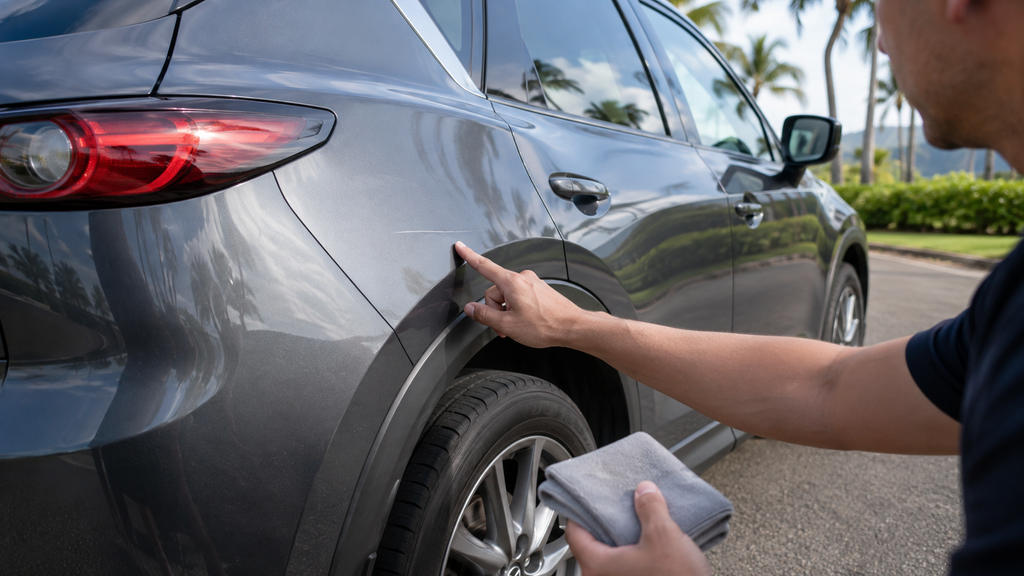
Does Buffing Take Out Scratches on Mazda Paint Safely

Does buffing take out scratches on Mazda paint? It can reduce shallow clear coat marks, but deeper damage needs another repair path. However, a scratch may look small while still cutting through several paint layers. Therefore, the first step is identifying depth before reaching for compound or a polishing pad. Mazda paint uses layered protection, so every abrasive pass removes a tiny amount of clear coat. Because that material does not grow back, restraint matters more than aggressive correction. What Buffing Does to Automotive Paint Buffing smooths a very small portion of the clear coat around a shallow scratch. It does not fill the groove with new paint. Instead, abrasive material removes microscopic high spots beside the mark. That levels reflected light across the surface and makes the scratch harder to see. Why does that distinction matter? A deeper groove still remains after the surrounding clear coat becomes thinner. Therefore, adding more pressure cannot restore missing color or primer. It only removes more clear material near the damaged area. more In addition, Mazda exterior paint includes a clear upper layer over the colored finish. Beneath that sits primer and the panel surface. A light scratch may stay within the clear layer. However, a deeper cut can reach color, primer, or bare metal. For this reason, does buffing take out scratches only when the damage stays shallow enough? Yes, shallow clear coat marks may respond well to correction. Deeper cuts need another repair method because the missing paint must be restored. Does Buffing Take Out Scratches in the Clear Coat? Buffing can reduce shallow clear coat scratches by leveling a microscopic layer around the damaged area. These marks may appear white under direct light without showing missing body color. They may also look stronger from one viewing angle and softer from another. A clean surface matters before any judgment. Dirt, rubber, or paint from another object can sit on top of the Mazda finish. Therefore, a scuff may look severe before that transfer is removed. Gentle cleaning can reveal whether the vehicle paint itself was cut. The fingernail test gives another clue. Run a clean nail lightly across the mark while the panel is cool and clean. If the nail glides across, the groove may remain shallow. If it catches clearly, the cut may extend beyond the upper clear layer. Before any correction, look for several clues together: Check whether the Mazda body color remains visible inside the mark. Missing color points toward damage below the clear coat. Look for white, gray, or metallic material inside the groove after cleaning. That can signal primer or exposed panel material. Compare the mark under direct light and shade. Shallow clear coat scratches may change appearance as reflections move. Because no single clue gives a complete answer, combine touch, color, and location before deciding. That approach lowers the chance of removing healthy clear coat around deeper damage. When Is a Car Scratch Too Deep to Buff? A scratch needs another repair method once it cuts through the clear coat into lower paint layers. Once color is missing, buffing cannot recreate it. The same rule applies when primer or bare metal appears. Does buffing take out scratches that catch a fingernail? Sometimes a light catch can still come from upper layer damage. However, a strong catch paired with missing color usually points deeper. Therefore, the nail test should support the visual check, not replace it. Visible primer may appear pale gray, white, or another uniform shade beneath the body color. Bare metal can look bright or dull silver. Those deeper layers need protection because the upper paint film no longer seals the panel. A long scratch can still be shallow. By contrast, a short scratch can cut deeply. Depth matters more than length when choosing a repair path. Once the groove reaches lower layers, polishing can make the area look uneven without fixing the missing paint. Therefore, stop before aggressive correction. Touch up paint, localized refinishing, or panel repair may be more suitable. Why Scratch Location Changes the Risk A shallow mark can still deserve extra caution near a panel edge or sharp body line. Clear coat thickness can vary across curved surfaces and past repair areas. Therefore, location matters alongside depth. Why are edges more sensitive? Polishing pads contact raised lines with greater pressure in a smaller area. That can remove clear coat faster than on a broad, flat panel. In addition, repeated correction from prior detailing may leave less material than expected. Mazda styling uses sculpted contours across doors, fenders, hoods, and quarter panels. Those shapes give the body its flowing form. However, they also create areas where machine polishing needs controlled technique. Furthermore, past paintwork also changes the decision. A repaired panel may have a different clear coat thickness from the factory finish. Without measuring the surface, you may not know how much material remains. For this reason, does buffing take out scratches safely near every body line? No. A mark may look shallow yet sit in a sensitive location. Professional assessment makes sense when depth, location, or prior paint history is uncertain. What to Check Before Choosing a Repair Path The safest decision starts with inspection, not correction. Clean the panel first, then study the mark from several angles. Moreover, good lighting can show whether the groove changes color, catches a nail, or crosses a body line. Before touching the paint, check these points: Confirm whether the mark is still visible after gentle cleaning. Surface transfer may disappear without abrasive correction. Check whether your fingernail catches in the groove. A strong catch can indicate deeper paint loss. Look at the location before choosing a polishing method. Edges, sharp contours, and repaired panels deserve extra caution. If the mark stays within the clear coat, a mild correction may reduce its appearance. However, deeper damage needs paint restoration, not more abrasion. Continuing to polish can thin the surrounding clear coat without repairing the original cut. Does buffing take out scratches on every Mazda panel? No. The answer depends on depth, visible paint loss, panel location, and prior repair history. When those clues point deeper, professional attention protects the surrounding finish from unnecessary correction. If you are unsure what layer the scratch reached, have the area inspected before polishing further. Cutter Waipahu Mazda offers exterior inspection and guidance for the next repair step. A careful inspection keeps a small mark from turning into a larger paint problem.