

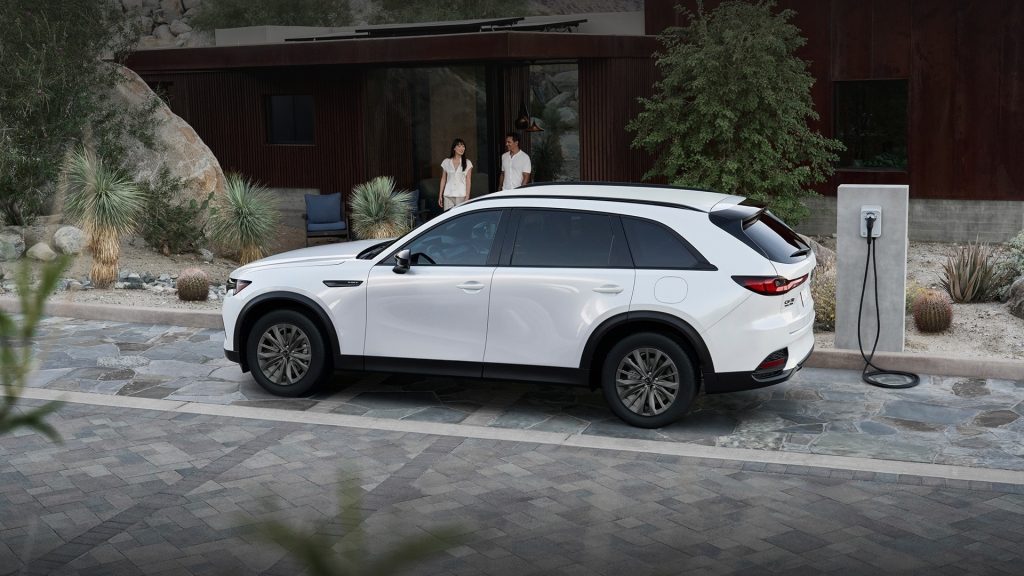
Mazda CX70 Plug In Hybrid ownership becomes easier to understand once drivers see how charging, electric driving range, regenerative braking, and gasoline backup operation work together during everyday commuting. Many drivers researching electrified SUVs are not trying to eliminate gasoline completely. Instead, they are evaluating whether a plug in hybrid setup can reduce fuel usage during shorter trips while still maintaining traditional long distance travel flexibility. The drivetrain inside this electrified Mazda SUV combines battery propulsion and gasoline operation into one coordinated system that changes how acceleration, charging, braking, and commuting function throughout daily driving.
How the Plug In Hybrid Drivetrain Works
The Mazda CX70 Plug In Hybrid uses both an electric motor and a gasoline engine to propel the SUV. Unlike a traditional hybrid, the battery pack inside this electrified configuration can be externally charged through charging equipment connected to either household outlets or higher voltage charging stations.
During lower speed driving and shorter commuting distances, the electric motor can power the vehicle independently while battery energy remains available. During stronger acceleration or higher speed travel, the gasoline engine can activate and work alongside the electric motor to provide additional propulsion.
Drivers researching Mazda CX70 Plug In Hybrid ownership sometimes assume the vehicle stops functioning once battery range reaches zero. That is not how plug in hybrid systems operate. Once usable electric range becomes depleted, the drivetrain transitions into traditional hybrid operation where the gasoline engine assumes a larger propulsion role while regenerative braking continues recovering smaller amounts of electrical energy during driving.
The coordination between both propulsion sources is electronically managed through onboard control modules monitoring throttle position, driving speed, battery charge levels, acceleration demand, and traction requirements. Instead of forcing drivers to manually switch between propulsion methods constantly, the drivetrain continuously balances electrical power and gasoline operation automatically.
Electric propulsion also changes acceleration feel. Electric motors generate torque immediately during throttle input because electrical propulsion does not require engine rev buildup before producing forward movement. Drivers transitioning from traditional gasoline SUVs may notice smoother low speed acceleration and quieter stop and go commuting movement during battery powered operation.
How Charging Methods and Charging Speeds Work
How long does charging take? Charging speed changes based on charging voltage, amperage delivery, battery temperature, and charging equipment type.
Level 1 charging uses a standard household outlet. This charging method supplies lower voltage and slower battery replenishment, though it allows overnight charging without requiring specialized home charging installation. Drivers returning home in the evening can connect the SUV overnight and begin the next morning with replenished battery range available for shorter commuting cycles.
Level 2 charging increases charging speed substantially by using higher voltage charging equipment commonly installed in garages, public charging locations, commercial parking areas, and residential charging setups. Faster charging reduces the amount of time required to replenish battery energy between driving sessions.
Drivers evaluating charging practicality should examine:
• average commuting distance
• overnight parking access
• nearby charging availability
• charging frequency expectations
• home electrical setup
The plug in hybrid SUV does not require charging to continue operating because the gasoline engine remains available after battery depletion. However, consistent charging allows drivers to maximize electric commuting range and reduce gasoline usage during shorter driving cycles.
Many competitor articles oversimplify charging discussions without explaining how charging routines integrate into daily commuting habits. Plug in hybrid ownership differs from full EV ownership because charging supplements gasoline operation instead of completely replacing it.
How Regenerative Braking Replenishes Battery Energy
Regenerative braking converts vehicle momentum into electrical energy during deceleration. Instead of allowing braking energy to dissipate entirely as heat, the drivetrain redirects part of that energy back into the battery pack.
When the driver lifts off the accelerator or applies braking pressure, the electric motor temporarily changes function and begins operating as a generator. As the wheels continue rotating during deceleration, rotational energy transfers into the motor assembly and converts into electrical current stored inside the battery.
This energy recovery process becomes more noticeable during urban commuting because repeated slowing and braking cycles create more opportunities for battery replenishment. Drivers navigating stop and go Honolulu traffic may experience more regenerative energy recovery than drivers spending most of their time at steady highway speeds.
Regenerative braking changes:
• braking feel
• energy recovery timing
• battery replenishment frequency
• stop and go efficiency
• low speed commuting operation
The system does not fully recharge the battery independently, though it continuously supplements battery energy throughout driving. Most competitor articles mention regenerative braking without explaining how energy conversion occurs mechanically. The electric motor itself becomes part of the charging process during deceleration.
Drivers transitioning from traditional gasoline vehicles may also notice a slightly different braking sensation because regenerative braking begins slowing the SUV before conventional friction brakes fully engage.
What Happens After Electric Range Is Depleted?
What happens after battery range becomes depleted? The drivetrain continues operating normally using the gasoline engine alongside hybrid energy recovery operation.
The SUV does not become stranded once electric range reaches zero. Instead, battery reserve reaches a lower operating threshold where gasoline propulsion becomes more active while regenerative braking and hybrid coordination continue managing smaller electrical energy reserves automatically.
This transition changes how the drivetrain distributes propulsion during:
• highway acceleration
• stop and go commuting
• hill climbing
• passing movement
• sustained highway travel
Drivers may still experience battery assisted acceleration after depletion because regenerative braking continues recovering energy during deceleration. The system continuously redistributes available electrical energy where beneficial during driving.
Plug in hybrid ownership differs substantially from full EV ownership because drivers maintain gasoline refueling flexibility during longer travel. Charging remains beneficial for maximizing electric commuting range, though ownership does not rely entirely on charging infrastructure access.
The drivetrain continuously balances electrical propulsion, gasoline operation, regenerative energy recovery, and battery reserve management throughout changing driving conditions.
How Hawaii Driving Patterns Fit Plug In Hybrid Ownership
Many commuting routes throughout Honolulu and surrounding areas involve shorter travel cycles combined with heavier traffic slowing and repeated braking movement. Those driving patterns naturally support regenerative braking operation and battery assisted commuting efficiency.
Drivers evaluating the Mazda CX70 Plug In Hybrid should examine how their daily driving routines align with electric commuting range and charging opportunities. Shorter commuting distances may allow some drivers to complete substantial portions of daily travel using battery propulsion before gasoline operation becomes more active.
Important ownership considerations include:
• average daily mileage
• home parking access
• charging availability
• traffic frequency
• highway versus urban driving balance
The electrified drivetrain also changes how the SUV feels during lower speed commuting. Quieter acceleration, smoother stop and go movement, and reduced engine cycling create a different driving impression than traditional gasoline only SUVs.
Plug in hybrid ownership is not solely about fuel reduction. The drivetrain changes how charging, braking, acceleration, energy recovery, and commuting operation function throughout everyday driving while still maintaining long distance travel flexibility through gasoline backup operation.
Connect with us


- June 2026
- May 2026
- April 2026
- March 2024
- February 2024
- December 2023
- November 2023
- October 2023
- September 2023
- August 2023
- July 2023
- June 2023
- May 2023
- April 2023
- March 2023
- February 2023
- January 2023
- December 2022
- November 2022
- October 2022
- September 2022
- August 2022
- July 2022
- June 2022
- May 2022
- April 2022
- March 2022
- February 2022
- January 2022