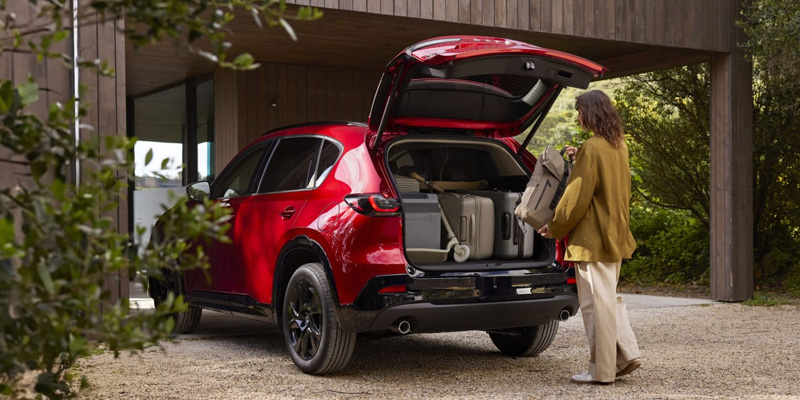
The Mazda CX-50 Hybrid is being researched for more than one reason. Shoppers want the MPG figure, but they also want to know whether the vehicle still feels composed, responsive, and useful in everyday driving. For drivers in West Oʻahu, that question matters because daily use is rarely just one thing. It can mean stop and go traffic, short errand runs, longer highway stretches, and wet road conditions that change how traction feels behind the wheel. The CX-50 Hybrid is built to answer those demands through a full hybrid system, which means it combines a gasoline engine with electric motors and shifts power delivery based on speed, load, and driving conditions. Mazda lists the 2026 CX-50 Hybrid at an EPA estimated 39 city, 37 highway, and 38 combined MPG, with up to 219 total system horsepower and standard e-AWD.
How the Mazda CX-50 Hybrid Powertrain Works in Daily Driving

How does the Mazda CX-50 Hybrid actually work in everyday driving? A full hybrid system uses both gasoline and electric power to improve efficiency without requiring the driver to plug the vehicle in. In the Mazda CX-50 Hybrid, the system pairs a 2.5 liter gasoline engine with electric motor assistance so the vehicle can rely more heavily on electric support in low speed and transitional driving, then blend gasoline and electric output as demand increases. Mazda states the CX-50 Hybrid uses a 2.5 liter four cylinder engine, three electric motors, and a total system output of up to 219 horsepower.

This matters because daily performance is not defined only by peak horsepower. It is shaped by how the vehicle responds when pulling away from a stop, creeping in traffic, or making light throttle adjustments through crowded roads. Electric motor assistance improves those moments by delivering torque early, which gives the CX-50 Hybrid a smoother, more immediate feel at lower speeds than a gas engine alone would typically provide. That does not make it behave like a turbocharged CX-50, but it does make the system feel more efficient and composed in normal commuting conditions.

The most important daily-driving changes show up in places where hybrid systems do their best work:

Read the rest of this entry »

Choosing between the Mazda CX-5 and Mazda CX-30 often comes down to one core question. How much does size actually change the way the vehicle fits into your daily life? On paper, both are compact SUVs. In practice, their dimensions influence how passengers sit, how cargo loads, and how easily the vehicle moves through traffic and parking. Understanding how these differences work helps you decide which one truly matches your routine in West Oʻahu.

How the CX-5 and CX-30 Are Sized Differently and Why It Matters

How much bigger is the Mazda CX-5 than the CX-30 and does it matter? The CX-5 is built with a longer body and wider stance, while the CX-30 uses a shorter and more compact footprint designed for tighter maneuverability.

Vehicle size is not just a measurement. It defines how space is distributed between passengers, cargo, and road positioning. The CX-5 uses its additional length to extend cabin space and cargo depth, while the CX-30 keeps dimensions tighter to improve agility and ease of placement in smaller spaces.

The difference shows up in how each vehicle feels in motion:

Read the rest of this entry »

Every Mazda3 Sedan is built around a single intention. Driving should feel natural, balanced, and connected. As you move through the 2026 Mazda3 Sedan trims available at Cutter Mazda Waipahu, that connection stays consistent, but the way the vehicle responds to your environment becomes more refined. The real question for most drivers is not just what features are included, but how each trim changes the way the car behaves during everyday driving in West Oʻahu.

How Mazda3 Sedan Trim Levels Are Structured and Why It Matters

What are the Mazda3 trim levels and how do they differ? The Mazda3 Sedan trims are structured as progressive system integrations, where each level builds on the last by improving how the vehicle manages traction, comfort, and driver awareness.

The available trims include 2.5 S, 2.5 S Select Sport, 2.5 S Preferred, 2.5 S Carbon Edition AWD, and 2.5 Turbo Premium Plus AWD. Each trim is engineered as a complete configuration, meaning features are grouped together to maintain balance across all systems.

Mazda’s approach is not about adding isolated features. It is about refining how systems work together. As you move up the lineup, several key areas evolve at the same time:

Read the rest of this entry »

When it comes to family vehicles, the most universally preferred body style tends to be an SUV. A crossover SUV like the 2024 Mazda CX-50 has the space and standard features that will make transporting your growing family a breeze. Learn all about the base model of the CX-50 today before you drop by your local dealership.

The 2024 Mazda CX-50: Embracing Adventure with Style

The 2024 Mazda CX-50 has eight trim levels, starting with the 2.5 S Select model. The base trim sets the tone for the rest of the model lineup with a perky 2.5-liter SKYACTIV-G four-cylinder engine with cylinder deactivation that produces 187 horsepower and 186 lb-ft of torque. This powertrain has an advanced direct injection fuel system, an aluminum alloy engine block, and a towing capacity of 2,000 lbs. The base model comes with a standard i-ACTIVE AWD system and Mazda selectable drive modes with Sport and Off-road functions. This crossover SUV also has SKYACTIV vehicle dynamics with G-vectoring control, a six-speed automatic transmission with an optional manual shift mode, and a Torsion beam rear suspension.

Fuel Economy

The CX-50 base model has a fuel tank capacity of 15.9 gallons. You can expect this crossover SUV to have a fuel economy of 24 MPG in the city and 30 MPG on the interstate.

Dimensions

The 2.5 S Select model has a 110.8-inch wheelbase. This crossover SUV is 185.8 inches long and 63.5 inches tall, including the shark fin antenna. When the side mirrors are folded in, the SUV is 72.9 inches wide; when the side mirrors are open, the vehicle is 80.8 inches wide. The minimum ground clearance for this model is 8.3 inches. The interior measurements of this compact crossover SUV include 41.7 inches of front legroom and 38.8 inches of rear legroom. This SUV has 39.1 inches of front headroom, 38.9 inches of rear headroom, 55.9 inches of front shoulder room, and 53.6 inches of back shoulder room. The passenger volume is 100.3 cubic feet. Cargo volume is 31.4 cubic feet with the seats up or 56.3 cubic feet with the seats down.

Colors and Materials

The basic paint color options for the 2.5 S Select model are Jet Black Mica and Ingot Blue Metallic. Drivers can upgrade to premium color selections such as Wind Chill Pearl, Sour Red Crystal Metallic, Polymetal Gray Metallic, and Machine Gray Metallic. The only interior color is Black leatherette seating material with Gray accents.

Exterior

The base model has 17-inch aluminum alloy wheels with all-season black tires, a temporary spare tire, and Black dual power outside mirrors with built-in LED turn indicators. This model has standard lighting features such as LED headlights, automatic headlights, LED daytime running lights, and high beam control. The 2.5 S Select trim comes with automatic rain-sensing windshield wipers, an intermittent rear window wiper with a washer, body-colored rear roof spoiler, rear privacy glass, and an AWD badge. This model also has dual exhaust outlet tips with a bright finish.

Convenience

Standard convenience features for the 2024 Mazda CX-50 base model are speed-sensitive power door locks, push-button start, a rearview mirror with manual day/night, an electronic parking brake, and a tilting-telescoping steering wheel column. This model also has an electronic parking brake, illuminated vanity visor mirrors, a rear window defogger, one-touch windows, and dual-zone automatic climate control with an integrated pollen filter. This Mazda model has ample storage space thanks to features like the center console with a tray and covered storage bin, front-row seatback pockets, door bottle holders, and a rear center armrest with storage. This crossover also has an overhead storage console with an LED lamp and sunglasses holder.

Seats

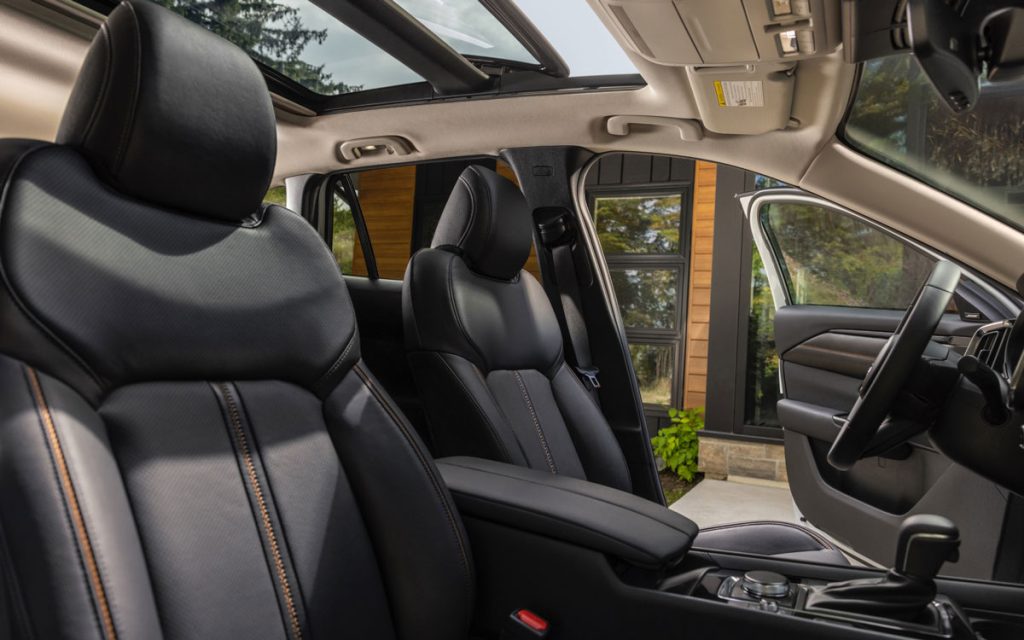
The 2024 Mazda CX-50 2.5 S Select trim can seat up to five passengers. This model has a six-way manually adjustable driver’s seat, a four-way manually adjustable passenger’s seat, adjustable headrests, and a rear seat with a 60.40 remote fold-down feature. This model also has carpeted floor mats, a leather steering wheel, and a leather gear selector knob.

Infotainment

Mazda vehicles always have the most cutting-edge standard infotainment features. The base CX-50 has a 10.25-inch color display, an eight-speaker sound system, and steering wheel-mounted controls for cruise control, phone, and audio functions. This model supports integration with Android Auto and wireless Apple CarPlay. Bluetooth hands-free phone and audio streaming are also standard. Along with the robust infotainment system, the 2.5 S Select model also comes with a multi-function commander control, a voice command infotainment system, HD radio, integrated Pandora radio, and SMS text message audio features. The base trim even has a three-year Mazda Connected Services trial and an E911 automatic emergency notification.

Safety

Standard safety features for the base model include dual front airbags, front-row knee airbags, and front seat belt pre-tensioners with built-in force limiters. This model has an anti-lock brake system with brake assist, brakeforce distribution, and forward smart brake support. Dynamic stability control and traction control both fortify the handling of this crossover SUV. The 2.5 S Select model comes with advanced driver assistance features such as Mazda radar cruise control with integrated stop-and-go, lane departure warning, lane-keep assist, rear cross-traffic alert, blind spot monitoring, hill launch assist, driver attention warning, and a rearview monitor. This model also has emergency lane keeping with road keep assist as a standard feature.

Accessories and Packages

The base model has several available packages and accessories to upgrade select parts of the vehicle. The Convenience Package adds a frameless HomeLink mirror and charging pad to the car, while the Accent Package introduces side rocker garnish and illuminated door sill plates. Other accessories include splash guards, a trailer hitch with a seven-pin harness, and a retractable cargo cover. Mazda also has various roof accessories, such as roof rack attachments and a roof tent for outdoor lovers. The base CX-50 trim is packed with standard features and advanced technology. This crossover SUV is a great option for growing families who love recreational activities. Reserve your Mazda CX-50 when you contact Cutter Mazda of Waipahu in Waipahu, HI today.

When you step on the brake pedal, you expect your Mazda to stop as quickly and smoothly as it’s designed to. Unfortunately, aged or damaged parts can make braking slower, which makes an accident more likely. If you need a brake repair, your Mazda dealer can fix the problem for you. These are some of the signs that your brakes need repair.

Signs You Need a Professional Brake Repair at Your Mazda Dealer

Leaking Brake Fluid

A car’s braking system depends on force to quickly and efficiently bring the wheels to a stop. The force is provided by pressurized brake fluid that supplies the hydraulic power which enables the system to work. This fluid is carried through the system in rubber brake hoses and metal brake lines. Despite their high quality, these components can become damaged, and the fluid will leak out. If the brake fluid is leaking, you’ll feel less response when you press down on the brake pedal. Your car will also take longer to stop than it should. It’s very difficult for any driver to spot a leak as this fluid is thin and looks similar to cooking oil. If you suspect a leak, contact your Mazda dealer immediately so our expert technicians can trace the leak and seal it. Once this is done, your brakes will work normally again.

High-Pitched Screeching Noises

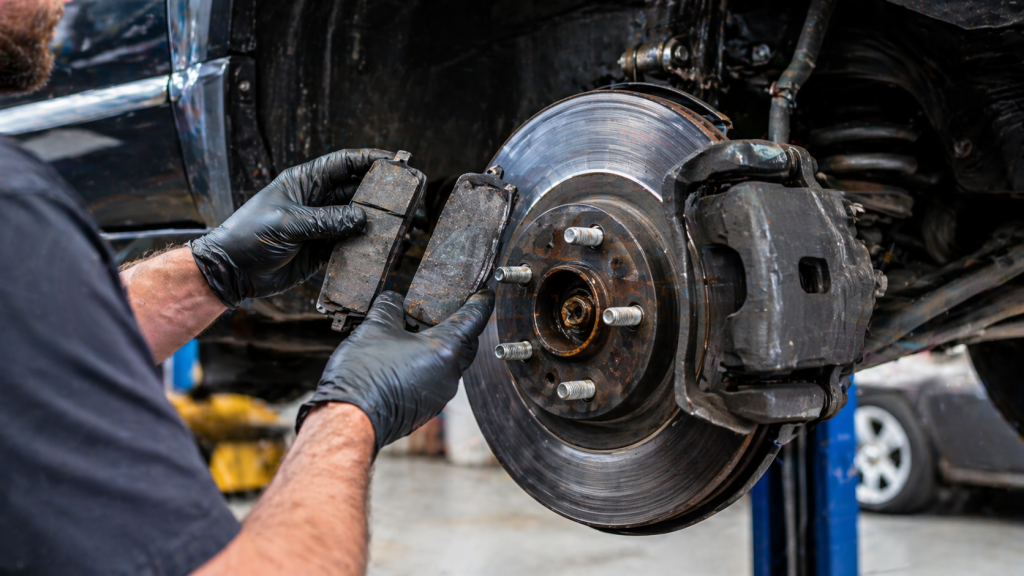
If you hear a loud screeching noise each time you brake, your brake pads have worn out, and you need a brake repair. The brake pads fit into the calipers, and the calipers clamp onto both sides of each wheel rotor when you hit the brakes. The pads have a friction-generating material covering that helps to quickly stop the rotors and bring your car to a halt. The material covering a pad slowly wears down, as the friction generated by the pad causes minute portions of the material to break off each time you apply the brakes. When a pad’s covering drops to 1/4′′ thickness, it reveals a metal spike buried in the material. This spike will scratch against the rotor when you brake as a warning that the pads are worn. We can quickly replace the pads, the noise will stop, and your brakes will work more effectively.

Overheated Brake Fluid

As we’ve seen, the brake fluid is forced through the system under high pressure when you brake, and this pressure generates heat. Once you take your foot off the brake pedal, the pressure reduces, and the fluid cools again. If you’re forced to ride your brakes, the brake fluid is kept under constant pressure. The temperature of the brake fluid will rise due to the pressure, and it can overheat. Overheating is more likely with older brake fluid due to its reduced heat resistance. You’ll know your brake fluid is overheating as a nasty chemical stench will rise from the brakes. If the fluid gets hot enough, it will boil, releasing bubbles of gas into the braking system. These gas bubbles can block the flow of fluid, causing further brake issues. We solve this problem by bleeding the brakes to remove the bubbles and replacing the brake fluid.

Glazed Brake Pads

Riding your brakes can often be necessary if you’re trapped in gridlock and inching forward at a snail’s pace. If you frequently ride your brakes, this can cause damage to the brake pads and the rotors. Keeping your foot resting on the brake pedal when you move forces the brake pad and wheel rotor to continue to rub against each other and generates excessive wear on both components. The contrast rubbing action can turn a brake pad’s surface smooth and glass-like, known as glazing. A glazed pad can’t generate friction, and the lack of friction forces the caliper to grip harder than it should to force the wheel to stop. In addition, the rotor can develop an irregular surface due to contact with the brake pad. At your Mazda dealer, we can replace the glazed pads, and we can also resurface a damaged rotor if required.

Uneven Rotor Surface

A rotor surface is completely smooth as this allows a caliper to easily grab and hold it to stop it moving. If you sometimes feel a vibration through the brake pedal when you brake, one or more of the rotor surfaces could be uneven. The vibration is caused by a caliper clamping onto a part smooth, part irregular surface. One of the most common causes of this problem is dried adhesive on a rotor. If you jam on the brakes when your car is traveling at speed, increased heat is generated between the fast-moving rotor and the friction material on a brake pad. The excessive heat can cause some of the adhesives on the pad to liquefy and smear across the rotor. The adhesive will dry quickly but leaves an irregular surface behind it. When a caliper grabs this surface, you’ll feel vibrations. Your Mazda dealer can fix this problem by resurfacing the rotor.

Damaged Brake Booster

The brake booster is part of the braking system and is positioned behind the pedal. When you step on the pedal, the booster increases the pressure you exert by 10x. This provides the required pressure without forcing you to do a leg press each time you brake. The booster uses a vacuum system to produce greater than human force. In time, the booster, like any other component, can become damaged. The vacuum system could develop a leak, and this prevents it from generating the necessary force. If you need to press down on the pedal much harder than you should, you need a brake repair ASAP. Our expert technicians will examine the booster and either repair it or replace it to fix this issue. Worn or damaged brakes make driving extremely dangerous, as you don’t have full control of your Mazda’s speed. We’re experts at brake repair and have the knowledge and technology to quickly and efficiently repair any possible issue. Call our service department today at Cutter Mazda of Waipahu in Waipahu, HI.

Not only does regular vehicle servicing keep you safer on the road, but it also saves you money on repairs while extending the lifespan of your car. To help you enjoy driving around Waipahu, HI, for longer, here are seven important vehicle services to have carried out at your local Mazda dealership. If you’ve neglected any of these services recently, head to your nearest service center without delay.

7 Services You Should Get Done at Your Local Mazda Dealer

Oil and Filter Changes

These days, most cars need to have an oil change every 7,500 to 10,000 miles. You can check your owner’s manual for the recommended oil and oil change intervals for your particular model. Motor oil protects the engine from friction, heat, corrosion, and build-ups of sludge and debris. If oil grows old and begins to lose its lubricating properties, the engine can quickly run into all kinds of problems, including overheating.

Both the oil and oil filters need to be checked and frequently changed. The oil filter collects metal fragments and other debris as the oil pushes it through the engine. If not replaced periodically, a clogged oil filter won’t be able to contain any more debris, which might start flowing back into the engine. Signs of aging motor oil include a burning smell, knocking and ticking sounds, and visibly dirty or low oil.

Brake Servicing

For the sake of your safety on the road, it’s essential to have your brakes inspected every 7,500 miles, which is usually twice a year. This would include having your brake fluid topped up. The technician will also check your brake lines, hoses, and connections for potential leaks. They’ll raise your vehicle to remove the wheels and brake components so they can carefully check each rotor disc, brake pad, and caliper for signs of wear and tear.

Even if you’ve had brake servicing done recently, always keep an eye out for signs of brake trouble. This might include high-pitched squeaking from a brake pad that needs replacing, vibrations from a scored or warped rotor disc, grinding sounds from the calipers, lengthening brake distances, or leaking brake fluid. If you experience any of these issues, don’t hesitate to have your brakes checked at your local Waipahu, HI, Mazda dealer.

Tire Rotations

As the tires are the only car parts in direct contact with the road, they also need to be diligently maintained. Along with checking the air pressure of your tires once a month, it’s also advisable to head to your nearest service center for tire rotation twice a year. Routine rotation ensures that your tires wear down more evenly, which keeps your tires in better condition for longer.

While rotating your car’s tires, the technician can also check for tire damage or excessive wear and tear. During monthly air pressure checks, drivers should also inspect their tires for diminished treads or suspicious bulges, gashes, embedded nails, deep cracks, and other damage. During the rainy season in Waipahu, HI, it’s especially important to have healthy tires to grip those wet winter roads.

Coolant Checks

Overheating is the greatest danger faced by most car engines. The engine’s cooling system effectively controls the temperature, as long as the coolant remains in good condition. Although very long-lasting, coolant gradually deteriorates until it loses its anti-rust properties and becomes acidic. This allows rust to build up inside the radiator and elsewhere in the system.

You can prevent this by flushing your coolant periodically. For many vehicles, the recommended interval is every 30,000 miles, which is every two or three years for most drivers. While flushing the coolant, your Mazda dealer can also examine and test the rest of the cooling system. As always, check the guidance for coolant flushing intervals in your owner’s manual.

Transmission Servicing

Another routine maintenance task to have done at your local service center is transmission servicing. If you drive an automatic transmission, you’ll need to have this carried out every 60,000 to 100,000 miles. The recommended interval is usually every 30,000 to 60,000 miles for manual transmissions.

Transmission service will always involve flushing out and replacing the old transmission fluid. The technician may also clean or replace the filter and pan gasket and also inspect the sump pump and pan.

Windshield Wiper and Fluid

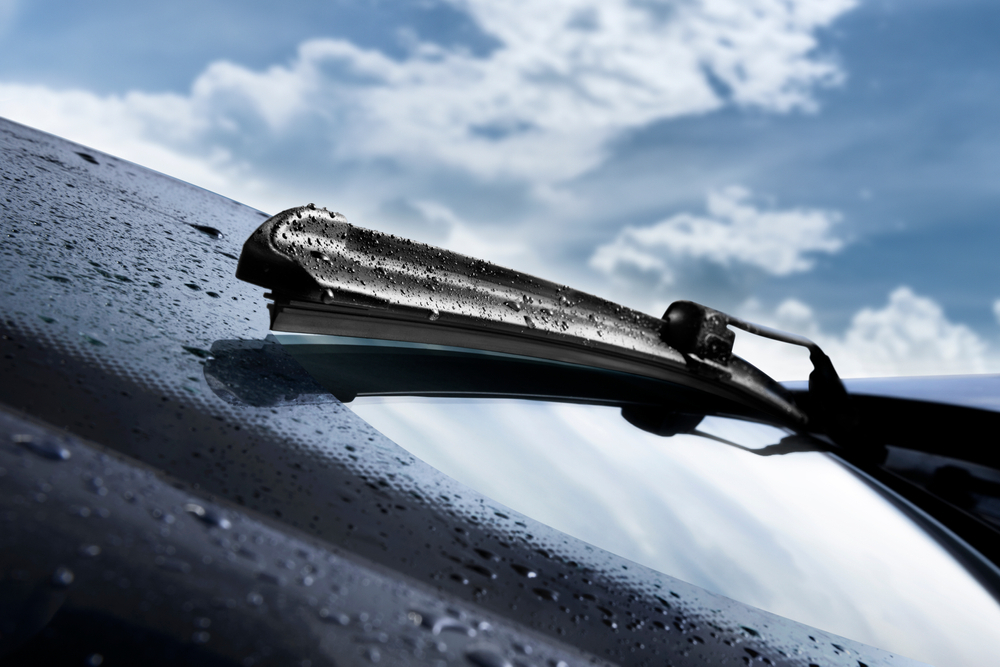
For safe driving in wet weather, your car’s windshield wipers must also be kept in tip-top condition. Whenever it rains, windshield wipers are vital for your visibility. Wiper fluid should therefore be checked and topped up once a month. Most drivers will also need to replace their wiper blades once or twice a year, as the rubber degrades and becomes damaged over time.

Battery Tests

Today more than ever before, modern cars depend on the battery for a reliable supply of electricity. Car batteries tend to last from three to five years, so after three years, keep an eye out for indications that your battery’s struggling. If you inspect the battery and see that it’s warped, corroded, or leaking, have it replaced at once at your local Mazda dealership.

Slow engine starts, fading headlights, and faltering electronics are also common signs of a failing battery. If you suspect that your battery is on its last legs, you can always ask a trusted technician at your local service center to inspect it and test it with a multimeter.

Schedule Routine Maintenance at Your Local Service Center in Waipahu, HI

It’s best to take a proactive approach to maintaining your vehicle, rather than waiting for signs of wear and tear. If you set up a routine servicing schedule at your local dealership in Waipahu, HI, you can count on the technicians to remind you whenever it’s time for your next visit. That way you maintain peace of mind and your car stays in excellent condition for longer.

Have your vehicle serviced by courteous, qualified technicians today at Cutter Mazda of Waipahu. We have an extensive selection of new and pre-owned cars and a top-notch service center providing for all the vehicle-related needs of drivers in and around Waipahu, HI.

Key Takeaway:

  • Enhance your auto loan approval chances with strategic financial planning.
  • Check and improve your credit score before applying for a car loan.
  • Save for a substantial down payment to demonstrate financial stability.
  • Research and compare auto loan options from various lenders.
  • Understand and negotiate loan terms, including interest rates.
  • Consider a co-signer to strengthen your loan application.
  • Keep your employment history stable for a positive impact.
  • Avoid applying for multiple loans simultaneously to prevent adverse effects on your credit.
  • Be mindful of your debt-to-income ratio for a favorable loan approval.

Embarking on the journey to buy your dream car is an exhilarating experience. The anticipation of cruising down the road in a vehicle that perfectly suits your lifestyle is undoubtedly thrilling. However, for many car buyers, the path to auto loan approval can seem like a winding road filled with uncertainties. Will you be approved? What factors influence the lender’s decision? Fear not, as we unravel the secrets to boosting your chances of auto loan approval in this comprehensive guide.

Ready to turn the key to your dream car? Explore our tips and embark on your car-buying journey with confidence. Visit Cutter Mazda Waipahu for expert guidance on finding the perfect vehicle.

1. Strategic Financial Planning

Before navigating the labyrinth of auto loan approval, embark on a journey of strategic financial planning. Create a meticulous budget that delves into your monthly income, expenses, and potential car-related costs. This roadmap clarifies your financial capacity and positions you as a responsible borrower in the eyes of lenders. Strategic financial planning offers a panoramic view of your financial landscape, laying the foundation for a successful auto loan application.

2. Credit Score Check

Like a financial report card, your credit score wields considerable influence in the auto loan approval process. Begin by obtaining a copy of your credit report and scrutinizing your score. If it falls short of excellence, take proactive measures to elevate it. Clear outstanding debts, adhere to timely bill payments, and seek guidance from a credit counselor if needed. A robust credit score heightens the likelihood of approval and secures more favorable interest rates, translating to long-term financial benefits.

3. Substantial Down Payment

In the dance of auto loan approval, a substantial down payment is your most elegant move. Beyond merely reducing the amount requiring financing, a hefty down payment serves as a powerful symbol of financial stability to lenders. Aim for a down payment of at least 20% of the car’s value, showcasing your commitment to the investment and diminishing the lender’s risk. This strategic maneuver places you in the driver’s seat, steering the auto loan approval process towards a more favorable trajectory.

4. Research and Compare Loan Options

The auto loan market resembles a diverse ecosystem, with varied options from banks, credit unions, and online lenders. Dive into this ecosystem, armed with research, and compare loan options meticulously. Scrutinize factors such as interest rates, loan terms, and additional fees. Shopping around isn’t just a prudent step; it’s a strategic move to unearth the most competitive and suitable auto loan for your financial tableau. A well-informed decision boosts your chances of approval and sets the stage for a harmonious financial journey.

5. Understand and Negotiate Loan Terms

Navigating the terms of your auto loan is akin to deciphering a complex code. Before sealing the deal, familiarize yourself with interest rates, loan duration, and any hidden fees. With this knowledge, don your negotiation hat and engage with the lender for more favorable terms. Whether it’s a lower interest rate or an extended loan duration, negotiating intelligently can profoundly impact your monthly payments and overall financial commitment. Effective communication and negotiation skills transform the auto loan process into a collaborative endeavor.

6. Consider a Co-Signer

In the symphony of auto loan approval, a co-signer can be the powerful crescendo that enhances harmony. If your credit history echoes a less-than-perfect melody or you’re a first-time car buyer, consider enlisting a co-signer. This ally with a robust credit profile vouches for your reliability, instilling confidence in the lender. The co-signer’s presence not only boosts your chances of approval but may also orchestrate more favorable terms. However, this collaborative performance requires open communication and shared responsibility for the loan’s symphony.

7. Stable Employment History

In the narrative of auto loan approval, stability is the protagonist, and your employment history assumes a pivotal role. A consistent job history, particularly with the same employer, portrays reliability. Avoid the plot twists of significant job changes or employment gaps during the loan application process, as these elements can raise eyebrows for lenders. Stability in your employment history adds an extra layer of assurance, narrating a story of dependability to the discerning eyes of those evaluating your loan application.

8. Avoid Multiple Loan Applications over a Longer Period

In the unfolding drama of auto loan approval, the script warns against a dramatic flourish-submitting multiple loan applications over a longer period. Each application triggers a hard inquiry on your credit report, and a flurry of such inquiries signals financial instability to lenders. Instead, approach the scene with a focused mindset. Research and choose the most suitable loan option before making your application, preserving your credit score and showcasing a measured and thoughtful approach to securing auto financing.

9. Debt-to-Income Ratio

The plot thickens as lenders scrutinize your debt-to-income ratio-a critical subplot in the auto loan approval saga. Aim to keep this ratio below 36%, considering existing debts and the proposed auto loan. A lower debt-to-income ratio becomes your protagonist, signaling a healthier financial situation and rendering you a more attractive candidate for loan approval. Prioritize reducing existing debts, elevating your character as a responsible borrower who understands the delicate balance of financial commitments.

Boost Your Chances for Auto Loan Approval

Strategic financial planning, credit score elevation, and tactical negotiations are your tools for a triumphant auto loan approval. Ready to take the stage in your dream car? Visit Cutter Mazda of Waipahu for expert guidance in transforming your automotive aspirations into reality. The spotlight awaits your entrance into the world of hassle-free auto financing.

Ready to hit the road in your dream car? Explore our inventory to discover the perfect vehicle for your journey!

Key Takeaways:

  • Balanced Tread Wear: Promotes even wear on all tires for extended longevity.
  • Improved Performance: Enhances traction, handling, and overall driving experience.
  • Optimized Fuel Efficiency: Ensures even tire wear contributes to fuel efficiency.
  • Prevents Irregular Wear Patterns: Mitigates issues like cupping and feathering.
  • Maintains Proper Wheel Alignment: Preserves vehicle alignment and steering responsiveness.
  • Identifies Potential Issues: Allows early detection of tire-related problems.
  • Cost-Effective Maintenance: Saves money by preventing premature tire replacement.
  • Manufacturer Recommendations: Adhering to guidelines maximizes tire warranty benefits.
  • Safety First: Ensures optimal tire condition for safer driving.

As a car owner, the importance of routine maintenance cannot be overstated, and one often overlooked yet crucial aspect is tire rotation. Tires are the unsung heroes of your vehicle, ensuring a smooth and safe ride. In this guide, we delve into the world of car tire rotation-why it matters, the benefits it brings, and how it plays a pivotal role in extending the life of your tires. Whether you’re a seasoned driver or a new car owner, understanding the significance of this maintenance practice is key to enhancing your driving experience and getting the most out of your investment.

Keep your ride in top shape with Cutter Mazda Waipahu. Visit our dealership for expert car care and elevate your driving experience with our pros.

The Significance of Car Tire Rotation

1. Balanced Tread Wear

Regular car tire rotation is a foundational practice crucial for promoting balanced tread wear across all tires. Tires at the front and rear of a vehicle experience different stresses due to their distinct roles. Without rotation, these variances lead to uneven tread depth, potentially reducing the overall lifespan of your tires. By consistently rotating your tires, you ensure that wear is evenly distributed, optimizing performance and extending durability.

2. Improved Performance

Car tire rotation plays a pivotal role in enhancing the overall performance of your vehicle on the road. Uneven tire wear can lead to disparities in traction and handling, impacting the driving experience. Regular rotation minimizes these discrepancies, ensuring consistent tread depth and improving your vehicle’s overall performance. That’s particularly vital in adverse weather conditions, where optimal traction and control are essential for safe driving.

3. Optimized Fuel Efficiency

The connection between car tire rotation and fuel efficiency is critical for environmentally conscious drivers and those looking to save on fuel costs. Even tire wear, facilitated by regular rotation, contributes to optimized fuel efficiency. Tires with uniform tread patterns and equal wear require less energy to roll, resulting in improved fuel mileage. For car owners aiming to reduce their carbon footprint or seeking practical ways to cut fuel expenses, incorporating tire rotation into their maintenance routine is a simple yet effective measure to enhance overall fuel efficiency.

4. Prevents Irregular Wear Patterns

Irregular wear patterns, such as cupping and feathering, can significantly impact tire performance and, consequently, the overall driving experience. These issues often arise when tires remain in the same position for extended periods without rotation. Regular tire rotation is an effective preventive measure against these problems. By consistently rotating your tires, you mitigate the risk of uneven wear patterns, preserving the integrity of the tire surface. That extends the life of your tires and ensures a smoother and safer ride by preventing irregularities that could compromise traction, handling, and overall tire performance.

5. Maintains Proper Wheel Alignment

Wheel alignment is a critical factor in vehicle performance and safety, and it can be affected by the constant forces exerted on the tires. Car tire rotation is crucial in maintaining proper wheel alignment over time. As tires wear at different rates, misalignment can occur, impacting steering responsiveness and potentially causing premature tire wear. Regular rotation helps distribute these forces evenly, ensuring that your vehicle maintains the intended alignment.

6. Identifies Potential Issues

Routine tire rotation promotes even wear and is a valuable opportunity to inspect your tires for potential issues. During the rotation process, it’s advisable to check for signs of damage, embedded objects, or irregular wear that might indicate other underlying problems. This proactive approach to tire maintenance allows for early detection of issues, facilitating timely intervention before problems escalate.

7. Cost-Effective Maintenance

Investing in regular car tire rotation is a strategic and cost-effective approach to overall vehicle maintenance. By ensuring even wear across all tires, you extend their lifespan, reducing the frequency of tire replacements. That translates to significant cost savings over time, making tire rotation a prudent and budget-friendly maintenance practice for car owners. While the upfront cost of rotation may be minimal, the long-term benefits in terms of reducing the frequency of tire purchases make it a financially wise decision.

8. Manufacturer Recommendations

Adhering to the tire rotation guidelines provided by the manufacturer is a fundamental aspect of maximizing the benefits of this maintenance practice. Manufacturers often specify the ideal rotation intervals based on the tire’s design, the vehicle’s specifications, and expected driving conditions. Following these recommendations ensures that you reap the maximum benefits of tire rotation and helps preserve any tire warranty. By aligning your rotation schedule with the manufacturer’s guidelines, you optimize the performance and longevity of your tires while ensuring compliance with warranty requirements.

9. Safety First

Above all considerations, car tire rotation prioritizes safety on the road. Even tire wear is essential for maintaining optimal traction, handling, and overall tire performance, especially during emergency maneuvers or challenging road conditions. By incorporating regular tire rotation into your maintenance routine, you contribute to a safer driving experience for yourself and others on the road. Safety should be the paramount concern for any car owner, and tire rotation emerges as a simple yet effective practice to ensure that your tires remain in optimal condition, enhancing your ability to navigate the roads safely.

Elevate Your Driving Experience with Cutter Mazda Waipahu

In conclusion, car tire rotation’s importance goes beyond extending your tire’s life; it directly impacts your driving experience, safety, and overall vehicle performance. By embracing this simple yet effective maintenance practice, you optimize fuel efficiency, prevent irregular wear, and identify potential issues early on. Elevate your driving experience with Cutter Mazda Waipahu, where expertise meets a commitment to keeping your ride in top condition. Schedule your car maintenance today and embark on a journey towards a smoother, safer, and more efficient drive.

Key Takeaways:

  • Carefully assess your monthly income and expenses to guide your car savings.
  • Consider researching fuel-efficient and compact car models that align with your budget, keeping the initial price and operating costs in mind.
  • Understanding car financing options lets you choose a method that suits your budget.
  • Automate your savings to create a disciplined savings routine, ensuring that a portion of your income goes directly to your car savings account.
  • Reduce or eliminate unnecessary expenses such as dining out, entertainment, shopping, and transportation.
  • A dedicated savings account helps keep your car savings separate from everyday finances, making it easier to track your progress.

For many, owning a car is more than just a mode of transportation; it’s a symbol of independence and a tangible achievement of financial stability. Whether you’re dreaming of your first car, upgrading to a new model, or expanding your vehicle fleet, understanding how to save money for a car is a crucial step. This guide will provide a roadmap to achieve your automotive goals by taking practical and achievable steps. So, if the open road beckons, read on to discover how to turn that dream car into a reality.

Here are the essential steps to help you save money for your dream car:

1. Creating a Realistic Budget

To begin saving for your car, the first step is to create a realistic budget that aligns with your financial situation. Start by assessing your monthly income and expenses. That’ll help determine how much you can comfortably allocate to your car savings fund. Be thorough in tracking your financial flows to ensure that your budget reflects your actual financial status.

2. Exploring Budget-Friendly Car Options

The type of car you choose significantly impacts your savings goal. When selecting a vehicle, it’s crucial to look for budget-friendly options that match your financial plan. For instance, fuel-efficient and compact car models tend to have lower price tags and operating costs.

3. Understanding Financing Options

Financing options, such as car loans, leasing, or dealership financing, enable you to acquire a car even if you haven’t saved the full purchase amount. Each of these options comes with its terms and benefits, so it’s essential to explore and compare them. Keep in mind that car loans involve making monthly payments, while leasing typically requires lower upfront costs. Understanding the various financing options empowers you to make informed decisions regarding how to purchase your car and select the financing method that best suits your financial goals.

4. Evaluating Monthly Savings Contributions

Once you have a budget and a car in mind, it’s time to determine how much you need to save each month to reach your car savings goal. Evaluate your monthly savings contributions and set a realistic target based on your budget and timeline. Remember that your savings plan should be achievable and not overly burdensome on your day-to-day finances.

Using financial calculators and car savings apps can help you determine the monthly savings amount required to meet your goal. Your savings should cover both the initial cost of the car and ongoing expenses like insurance, maintenance, and fuel.

5. Automate Your Savings

One of the most effective strategies for saving money is to automate your savings process. By setting up automatic transfers from your checking account to your car savings account, you ensure that a portion of your income is consistently allocated to your car fund. That eliminates the temptation to spend the money before saving it and makes the process seamless.

Essential Note: Many banks and financial institutions offer automated transfers so that you can schedule monthly or bi-weekly contributions to your savings account.

6. Cut Unnecessary Expenses:

An effective way to increase your car savings is to cut back on unnecessary expenses. Start by reviewing your monthly expenses and identifying areas where you can reduce or eliminate costs. Here are some common areas to consider:

  • Dining out: Cooking at home or brown-bagging your lunch can significantly reduce monthly expenses.
  • Entertainment: Evaluate your subscriptions to streaming services, gym memberships, or other leisure activities. Consider which ones you can cut or reduce.
  • Shopping: Before purchasing, especially for non-essential items, consider whether it aligns with your car-saving goals.
  • Transportation: Consider carpooling, using public transportation, or biking to work to save on fuel and maintenance costs.

7. Set Up a Dedicated Savings Account

By opening a dedicated savings account, you clearly distinguish between your car fund and everyday finances. This separation makes it easier to track your progress and ensures that your car savings remain untouched. Choose a bank or financial institution that offers a savings account with favorable terms, such as no or low fees and competitive interest rates.

8. Use Windfalls and Bonuses

Consider using windfalls and unexpected bonuses to boost your car savings. Windfalls include tax refunds, work bonuses, inheritance, or other unexpected financial gains. While it can be tempting to spend these extra funds on immediate wants, allocating them to your car savings account can help you reach your goal faster.

9. Monitor Your Progress

Throughout your car savings journey, evaluate whether you’re on track to meet your savings goals and adjust as needed. Here are some key aspects to consider:

  • Review your savings rate: Ensure you save the intended amount each month. If your financial situation changes or unexpected expenses arise, adjust your savings contributions.
  • Stay updated on your budget: Review and adjust your budget to reflect your current income and expenses.
  • Reassess your car choice: If the car you initially selected no longer aligns with your savings timeline, consider revising your car choice to fit your budget.

Save Money for a Car!

Saving money for a car is an achievable goal with careful planning, discipline, and dedication. Implementing these strategies ensures you are on the right path to owning your dream car.

And if you’re ready to start saving for your dream car, Cutter Mazda Waipahu is here to assist you in selecting the right vehicle and guiding you through the car-buying process. Get started on your car-saving journey today!

Key Takeaways:

  • Your vehicle’s transmission is pivotal in ensuring a smooth and reliable ride.
  • Regular maintenance is crucial to prevent many transmission issues from occurring.
  • Identifying early signs of transmission problems can save you from costly repairs and breakdowns.
  • Consult a professional mechanic when you notice any unusual transmission behavior.
  • Adhering to manufacturer-recommended service schedules is essential for maintaining a healthy transmission.

As a car owner, you understand your vehicle’s transmission’s vital role in ensuring a smooth and reliable ride. However, transmission problems can be some of the most expensive and frustrating issues to deal with. This guide will explore the top 10 car transmission problems that every car owner should recognize. Whether you drive a manual or automatic transmission, understanding these common issues and their early warning signs can save you from costly repairs and keep your car running smoothly.

And if you need assistance or professional advice, our experts at Cutter Mazda Waipahu are here to help. Call us today!

1. Transmission Fluid Leaks

Among the most common transmission problems, transmission fluid leaks are a perpetual concern for car owners. Recognized by the presence of red or brown puddles under your vehicle, these leaks indicate low transmission fluid levels. Low fluid levels can lead to overheating and eventual damage to your transmission. It’s a problem that can’t be ignored, as your transmission relies on a consistent fluid level for proper lubrication and cooling.

2. Slipping Gears

A transmission that slips in and out of gear while you’re driving can be a disconcerting issue. That often results in poor acceleration and a notable lack of power, making your car less efficient and unsafe. Typically observed in automatic transmissions, this issue may be caused by low transmission fluid levels, a worn-out clutch, or even more significant internal damage. It’s a problem that needs prompt attention from a professional mechanic to prevent further damage.

3. Delayed or Rough Shifting

Transmission problems are often characterized by delayed or rough shifting. That can manifest as a delayed response when you press the accelerator or as a noticeable jerk during gear changes. Delayed or rough shifting can indicate a range of issues, including low fluid levels, worn-out bands or clutches, or electronic control problems. Addressing this problem promptly can prevent further damage to your transmission.

4. Warning Lights

Modern vehicles are equipped with a range of warning lights to alert you to various issues, including transmission problems. If your check engine light or transmission warning light suddenly illuminates on your dashboard, it’s a clear signal that your car needs attention. Ignoring these warnings can lead to further damage and potentially more costly repairs. When these lights appear, it’s best to consult a professional mechanic who can diagnose and repair the issue.

5. Unusual Noises

Unusual noises emanating from your vehicle can be disconcerting, particularly when they are associated with the transmission. Whining, clunking, or grinding sounds while your car is in gear can indicate transmission problems. A whining noise may be due to low transmission fluid or worn-out bearings while clunking or grinding sounds can be signs of damaged gears or torque converters. It’s essential not to ignore these noises and have them promptly inspected.

6. Fluid Contamination

Transmission fluid contamination is another issue that can significantly impact the health of your transmission. Contamination can occur for various reasons, including mixing different types of transmission fluids, water intrusion, or the presence of metal particles from internal wear. Contaminated fluid can lead to increased friction and heat, ultimately causing damage to the transmission’s components. Regularly checking and changing your transmission fluid can help prevent this problem.

7. Overheating

An overheated transmission can pose significant issues for your vehicle. High temperatures can lead to fluid breakdown and, in severe cases, transmission failure. Overheating often occurs when driving in heavy traffic, towing heavy loads, or neglecting regular maintenance. To prevent overheating, it’s essential to maintain proper fluid levels, ensure the cooling system is functioning correctly, and take measures to reduce heat build-up, especially during heavy usage.

8. Torque Converter Problems

The torque converter, a critical component in automatic transmissions, can develop problems that affect your vehicle’s performance. These issues can manifest as slipping gears, overheating, or a shuddering sensation when the transmission shifts. If you notice any of these symptoms, having your car inspected and potentially replaced is crucial. Neglecting this component can lead to more severe transmission problems down the road.

9. Transmission Control Module Issues

Modern vehicles rely on sophisticated electronic controls to manage the transmission. If the Transmission Control Module (TCM) malfunctions, it can lead to various transmission problems, including erratic shifting, harsh engagement, or gear selection issues. When you notice any unusual behavior in your transmission, it’s advisable to have the TCM thoroughly inspected and, if necessary, repaired or replaced.

10. Unresponsive Transmission

A transmission that becomes unresponsive, sometimes referred to as a transmission that won’t engage or shift, is a severe issue that can leave you stranded. Low fluid levels, worn-out clutches, or internal damage can cause this problem. When your transmission fails to respond, addressing the issue immediately is essential. Ignoring it may lead to more significant problems and potentially costly repairs. Regular maintenance, prompt attention to warning signs, and consulting a professional mechanic when needed are all essential steps in ensuring your transmission remains trouble-free. A well-maintained transmission is vital to a worry-free driving experience.

Conclusion

Understanding these top 10 car transmission problems and their early warning signs is crucial for maintaining your vehicle’s performance and longevity. Regular maintenance, prompt attention to warning lights and unusual noises, and consulting a professional mechanic when needed are all critical steps in ensuring your transmission remains trouble-free. If you require professional assistance or guidance regarding your transmission, Cutter Mazda Waipahu is here to provide the support and services you need to keep your car running smoothly and reliably. Don’t let transmission problems catch you by surprise; stay informed and proactive to enjoy a worry-free driving experience.