

The Mazda CX-5 trim levels span a wider range of features than most compact SUV shoppers expect, and understanding the structure of that range makes the narrowing process considerably more direct. Each tier adds to the one below it without changing the car’s fundamental character. The same body, the same driving feel, and the same core safety suite carry through from the base configuration to the top of the range. What changes is the technology layered on top of that foundation. Shoppers who understand what each layer adds, and whether those additions match their daily routine, can identify the right trim without second-guessing afterward.
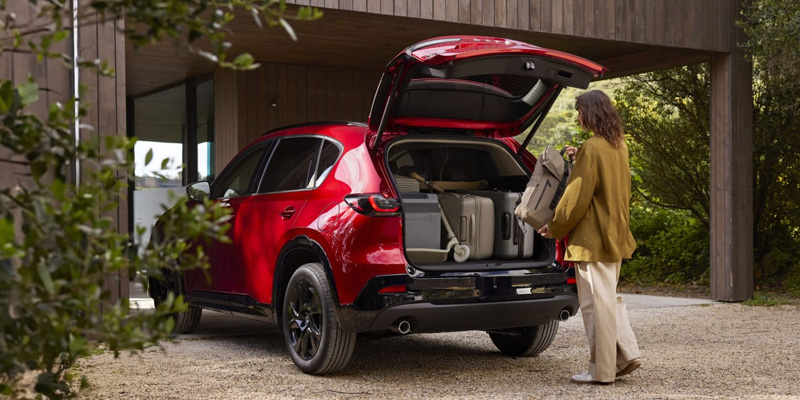
How Is the CX-5 Trim Structure Organized, and What Does Each Level Build Toward?
The CX-5 trim ladder runs from Sport through Select, Preferred, Premium, and Premium Plus. Each step adds features without removing anything from the tier below. Mazda structures the lineup so that no single trim requires a buyer to sacrifice a feature they had in a lower configuration. The additions are purely cumulative. That structure means the Sport is not a stripped model. It is the complete CX-5 with a defined feature set that suits a specific range of buyers well.
The Sport covers the fundamentals: a 2.5-liter naturally aspirated engine, a six-speed automatic transmission, cloth seating, a seven-inch infotainment display with Apple CarPlay and Android Auto, and the full i-Activsense safety suite. Select adds comfort and connectivity upgrades. Preferred adds convenience features that matter for families and frequent passengers. Premium adds audio quality and driver convenience technology. Premium Plus adds the most advanced driver assistance and visibility features in the lineup.
Understanding that structure matters because it reframes the trim decision. The question is not which trim is better. The question is which layer of additions crosses the threshold from nice-to-have into daily-use territory for a specific driver. A commuter who drives solo on a consistent route evaluates the trim ladder differently than a family of four who parks in a tight garage and uses their CX-5 on weekend drives across Oʻahu. Both are right answers for different buyers.
What Every CX-5 Includes Before Trim Selection Begins
Every CX-5 in the lineup ships with Mazda’s i-Activsense safety suite regardless of trim. That suite is not a package or an upgrade. It is standard equipment across Sport, Select, Preferred, Premium, and Premium Plus. Understanding what the suite includes helps buyers recognize that their trim decision is about comfort and technology, not about safety coverage.
The i-Activsense suite in the CX-5 includes Smart Brake Support with pedestrian and bicycle detection, which applies the brakes automatically when a forward collision is imminent and the driver has not responded. It also includes Lane-Keep Assist with Lane Departure Warning, which monitors lane markings and provides steering correction if the car begins to drift without a turn signal active. Blind Spot Monitoring watches the rear quarter zones and alerts the driver when a vehicle enters that area. Rear Cross Traffic Alert detects vehicles approaching from the sides when reversing out of a parking space. Driver Attention Alert monitors steering patterns and alerts the driver when fatigue-related deviation is detected.
Those five systems work as a connected suite rather than independent alerts. Smart Brake Support and Lane-Keep Assist address forward and lateral movement. Blind Spot Monitoring and Rear Cross Traffic Alert address visibility gaps at the vehicle’s flanks and rear. Driver Attention Alert addresses the driver’s own state. Every CX-5 buyer receives all five systems at every trim level, which means no safety compromise is required at any price point in the lineup.
What the Sport-to-Select Upgrade Actually Adds
The Select trim adds four meaningful changes over the Sport. Each addresses a different aspect of daily comfort and usability. Shoppers on the fence between the two configurations can evaluate each addition against their own routine to determine how many of them would appear in their average week. The additions are as follows:
- Heated front seats: The Select adds heated front seats, which remain useful year-round in Hawaii for early morning drives when temperatures are cooler or when air conditioning chill makes a warm seat welcome. Drivers who start their day before sunrise on the leeward side of Oʻahu will use this feature regularly.
- Leatherette seat surfaces: The Select replaces the Sport’s cloth upholstery with leatherette. The surface is easier to clean, holds up better under salt air and sunscreen exposure, and gives the interior a more finished appearance. For families or drivers who spend time near the water, the material change is a genuine daily-use consideration.
- Rear parking sensors: The Select adds ultrasonic rear parking sensors that alert the driver to objects behind the vehicle during low-speed reversing. These supplement the standard rear camera and are particularly useful in tight parking structures and crowded lots where the camera angle alone may not capture close obstacles at the bumper’s edges.
- Eight-inch infotainment display: The Select upgrades the center display from seven inches to eight inches and adds a larger, higher-resolution interface for navigation and media. The physical size difference is modest, but the additional screen real estate makes map viewing and menu navigation noticeably more comfortable on longer trips.
Taken together, the Select additions address seat comfort, interior material quality, reversing confidence, and screen usability. Drivers who commute daily and care about interior feel will find the Select’s package relevant from the first week. Drivers who park in open lots, travel alone, and use their phone for navigation may find the Sport sufficient without missing anything they would notice consistently.
What Premium and Premium Plus Contribute Beyond Select
The Premium and Premium Plus trims add technology and comfort features that address two specific buyer profiles: drivers who prioritize audio quality and cabin refinement, and drivers who spend significant time parking in tight spaces or navigating at highway speed. Understanding what each upper trim adds in concrete terms helps buyers assess whether the additional investment crosses their personal threshold. The Premium adds the following over the Preferred:
- Bose premium audio system: The Premium trim includes a 10-speaker Bose sound system with Centerpoint 2 surround technology. The system processes two-channel audio into a surround-sound field, which meaningfully changes the listening experience on longer drives. Drivers who use their commute for music, podcasts, or calls on speaker will notice the difference immediately over the standard audio setup.
- Leather-trimmed seating: The Premium replaces leatherette with genuine leather seating surfaces. The material difference is tactile and thermal. Leather breathes differently than leatherette and develops a different feel over time. For buyers who spend extended time in the car, the material distinction carries more weight than it might for shorter commutes.
- Power liftgate: The Premium adds a power liftgate with hands-free operation via a foot sensor beneath the rear bumper. Drivers who regularly load the CX-5 with groceries, beach gear, or sports equipment with their hands full will use this feature on nearly every relevant trip.
The Premium Plus builds on the Premium with three additional systems. The head-up display projects vehicle speed, navigation directions, and driver assistance alerts onto the windshield in the driver’s forward sight line, which reduces the need to look away from the road for information. The 360-degree surround view monitor stitches together camera feeds from all four corners of the vehicle into a top-down composite view, which is genuinely useful when parking in narrow stalls or navigating tight spaces in Waipahu’s denser commercial areas. The driver attention alert system at this tier adds an additional layer of monitoring beyond what the base suite provides. Premium Plus suits buyers who park frequently in challenging spaces or who spend meaningful highway time and want the most complete set of visibility and driver support tools available in the lineup.
Where Does the Turbo Fit and What Does It Change?
The CX-5 Turbo uses a 2.5-liter turbocharged four-cylinder engine that produces 227 horsepower and 310 pound-feet of torque with premium fuel, compared to 187 horsepower and 186 pound-feet from the standard naturally aspirated engine. That torque figure is the more significant number. Torque is what a driver feels in the first half of an acceleration event, and the CX-5 Turbo’s output is substantially higher across the mid-range where everyday driving happens.
The Turbo is available beginning with the Select trim and runs through the Premium Plus. It does not require a buyer to reach the top of the lineup. A Select-trim CX-5 with the Turbo engine delivers the powertrain upgrade without the full upper-trim feature set, which makes the performance option accessible at a lower price point than many shoppers assume. The Turbo pairs exclusively with i-Activ AWD. Front-wheel drive is not available with the turbocharged engine, so buyers who want the Turbo will also receive all-wheel drive as part of that configuration.
For Oʻahu driving, the Turbo’s torque advantage is most noticeable on highway merges, uphill stretches on H-1, and the steeper grades on roads approaching the Koʻolau foothills. The naturally aspirated engine handles those situations without issue, but the Turbo’s mid-range torque makes them feel more effortless. Buyers who spend regular time on those road types and want a more responsive throttle response will find the Turbo worth evaluating at Cutter Waipahu Mazda alongside the standard engine to assess whether the character difference justifies the addition for their specific daily route.
Connect with us


- July 2026
- June 2026
- May 2026
- April 2026
- March 2024
- February 2024
- December 2023
- November 2023
- October 2023
- September 2023
- August 2023
- July 2023
- June 2023
- May 2023
- April 2023
- March 2023
- February 2023
- January 2023
- December 2022
- November 2022
- October 2022
- September 2022
- August 2022
- July 2022
- June 2022
- May 2022
- April 2022
- March 2022
- February 2022
- January 2022