Blog / Waipahu Mazda Dealer

Blog

All Waipahu Mazda Dealer Blog Cutter Mazda Waipahu Service Waipahu Mazda Service

What to Know About Mazda CX-50 Hybrid Performance in Daily West Oʻahu Driving

The Mazda CX-50 Hybrid is being researched for more than one reason. Shoppers want the MPG figure, but they also want to know whether the vehicle still feels composed, responsive, and useful in everyday driving. For drivers in West Oʻahu, that question matters because daily use is rarely just one thing. It can mean stop and go traffic, short errand runs, longer highway stretches, and wet road conditions that change how traction feels behind the wheel. The CX-50 Hybrid is built to answer those demands through a full hybrid system, which means it combines a gasoline engine with electric motors and shifts power delivery based on speed, load, and driving conditions. Mazda lists the 2026 CX-50 Hybrid at an EPA estimated 39 city, 37 highway, and 38 combined MPG, with up to 219 total system horsepower and standard e-AWD. How the Mazda CX-50 Hybrid Powertrain Works in Daily Driving How does the Mazda CX-50 Hybrid actually work in everyday driving? A full hybrid system uses both gasoline and electric power to improve efficiency without requiring the driver to plug the vehicle in. In the Mazda CX-50 Hybrid, the system pairs a 2.5 liter gasoline engine with electric motor assistance so the vehicle can rely more heavily on electric support in low speed and transitional driving, then blend gasoline and electric output as demand increases. Mazda states the CX-50 Hybrid uses a 2.5 liter four cylinder engine, three electric motors, and a total system output of up to 219 horsepower. This matters because daily performance is not defined only by peak horsepower. It is shaped by how the vehicle responds when pulling away from a stop, creeping in traffic, or making light throttle adjustments through crowded roads. Electric motor assistance improves those moments by delivering torque early, which gives the CX-50 Hybrid a smoother, more immediate feel at lower speeds than a gas engine alone would typically provide. That does not make it behave like a turbocharged CX-50, but it does make the system feel more efficient and composed in normal commuting conditions. The most important daily-driving changes show up in places where hybrid systems do their best work: Low-speed acceleration can feel smoother because electric torque arrives quickly Repeated slowing and starting gives the system more opportunity to recover and reuse energy Mixed driving allows the vehicle to blend gasoline and electric output based on demand The driver gets efficiency gains without changing fueling habits or charging routines That is why the CX-50 Hybrid is not just a mileage version of the CX-50. It is a different power delivery strategy designed to make everyday motion more efficient and more controlled. Why CX-50 Hybrid MPG and Range Change the Ownership Experience Does the added MPG actually change what ownership feels like? Fuel economy matters most when it changes how often you need to stop, refuel, and think about fuel use during the week. Mazda rates the CX-50 Hybrid at 39 city, 37 highway, and 38 combined MPG, and Mazda also says it offers over 100 additional miles of driving range compared with the CX-50 2.5 S. That extra range matters because it changes ownership convenience, not just spreadsheet efficiency. A hybrid range advantage means more flexibility between fill ups, less disruption during a busy week, and better efficiency in the kinds of low speed and mixed driving patterns many commuters actually experience. Around West Oʻahu, where one day may involve neighborhood driving and the next includes longer cross-island stretches, that broader range can make the CX-50 Hybrid feel easier to live with over time. The practical ownership benefits usually show up in a few specific ways: Frequent in-town driving gives the hybrid system more chances to reduce fuel use Weekly routines can require fewer fuel stops because the vehicle travels farther on a tank Mixed commuting makes the combined MPG figure more relevant than highway numbers alone Efficiency gains are most noticeable when the route includes repeated deceleration and restart cycles That is the difference between reading a mileage claim and understanding how it affects ownership. The CX-50 Hybrid’s advantage is not only that it uses less fuel. It is that it uses less fuel in a way many daily drivers will actually feel. How Electric Assistance and e-AWD Shape CX-50 Hybrid Performance A lot of shoppers researching the Mazda CX-50 Hybrid want to know whether it still feels like a capable crossover or whether efficiency takes over the entire driving experience. The answer depends on understanding how the hybrid system and e-AWD work together. e-AWD means the rear wheels are powered by an electric motor when extra traction is needed, rather than relying only on a traditional mechanical connection front to rear. Mazda identifies the CX-50 Hybrid as using an on-demand e-AWD system. That setup matters in daily driving because traction support is not just about extreme conditions. It also affects how controlled the vehicle feels when roads are wet, when throttle is applied from a stop, or when grip changes across uneven pavement. In West Oʻahu, where rain can quickly change road feel, e-AWD gives the CX-50 Hybrid another layer of stability by allowing the system to help the rear axle when conditions call for it. The performance character is best understood through what the driver is likely to notice: Electric assistance supports smoother response at lower speeds e-AWD adds traction support when grip changes or extra stability is needed Hybrid power delivery favors consistency and efficiency over dramatic surge The system is better evaluated by everyday composure than by raw acceleration alone That makes the CX-50 Hybrid a strong fit for drivers who want confidence and predictability without giving up efficiency. It is not trying to mimic a turbo performance model. It is trying to deliver a more balanced form of daily responsiveness. What Regenerative Braking and Low-Speed Operation Mean in Traffic What does regenerative braking do, and where does the hybrid help most? Regenerative braking is the process of capturing energy during deceleration and sending it back to the hybrid battery instead of wasting that energy as heat alone. That is one of the main reasons a full hybrid can become more efficient in stop and go conditions than a comparable gas-only model. Mazda’s hybrid education materials emphasize that the CX-50 Hybrid’s efficiency gains are strongest in city driving, where its EPA city figure exceeds its highway figure. This becomes especially relevant in daily traffic. When a vehicle slows repeatedly, the hybrid system has more opportunities to recover energy and reuse it on the next launch or low-speed cruise. That means the Mazda CX-50 Hybrid’s advantage is not only about highway distance. It is also about how efficiently it handles interruption, which is exactly what traffic introduces. The daily benefits of regenerative braking and low-speed hybrid operation are easiest to understand this way: Repeated braking events help recharge the hybrid battery Low-speed travel allows the system to lean more on electric assistance Stop and go traffic becomes less wasteful than it would be in a gas-only vehicle Efficiency gains become more visible in everyday errands and commuting than in uninterrupted cruising That is why hybrid shoppers should not look only at the combined MPG figure. They should look at where and how they drive, because the CX-50 Hybrid is designed to reward exactly the kinds of interruptions that define urban and suburban traffic. Choosing the Mazda CX-50 Hybrid for Daily West Oʻahu Driving Is the Mazda CX-50 Hybrid worth it for everyday driving in West Oʻahu? That depends on whether your routine would benefit from stronger city efficiency, added range, smoother low-speed response, and standard e-AWD traction support. Buyers who do a mix of commuting, errands, neighborhood driving, and regular wet-road driving are the most likely to feel the hybrid’s advantages day after day. The CX-50 Hybrid tends to make the most sense for drivers who want these ownership benefits: Better city and mixed-driving fuel economy Fewer fuel stops over the course of a normal week More controlled low-speed power delivery in traffic Added traction confidence through standard e-AWD It may be less about choosing the highest-output version of the CX-50 and more about choosing the version that best matches routine use. For a driver who values efficiency but still wants crossover utility and standard AWD support, the CX-50 Hybrid offers a practical balance. Mazda’s own positioning centers that balance around 38 combined MPG, 219 total horsepower, and greater range than comparable gas CX-50 models. For daily West Oʻahu driving, that combination matters because it speaks to how the vehicle performs in real use, not just how it looks on a spec sheet.
Mazda CX-5 vs CX-30: Size and Interior Differences That Matter

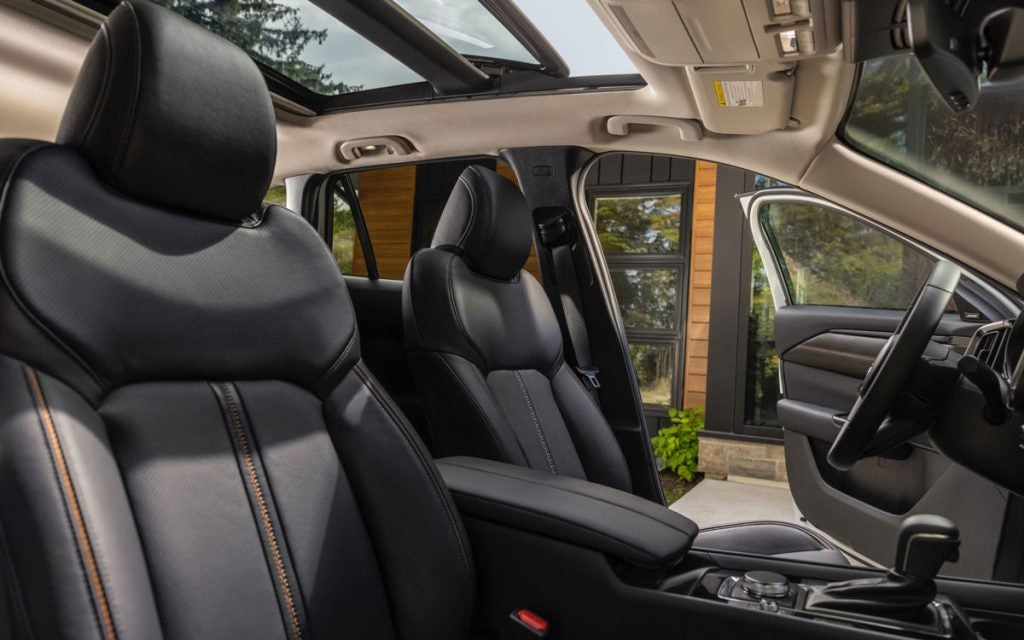
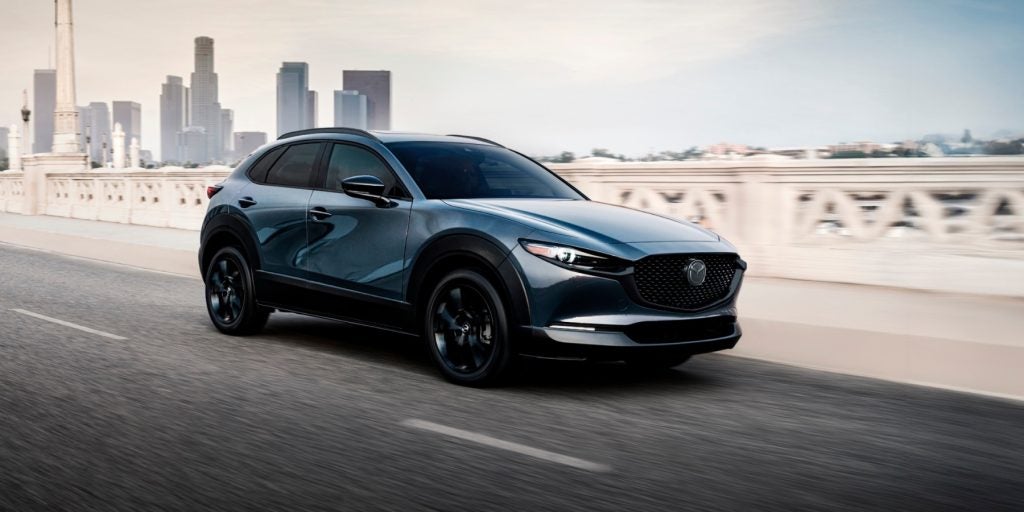
Choosing between the Mazda CX-5 and Mazda CX-30 often comes down to one core question. How much does size actually change the way the vehicle fits into your daily life? On paper, both are compact SUVs. In practice, their dimensions influence how passengers sit, how cargo loads, and how easily the vehicle moves through traffic and parking. Understanding how these differences work helps you decide which one truly matches your routine in West Oʻahu. How the CX-5 and CX-30 Are Sized Differently and Why It Matters How much bigger is the Mazda CX-5 than the CX-30 and does it matter? The CX-5 is built with a longer body and wider stance, while the CX-30 uses a shorter and more compact footprint designed for tighter maneuverability. Vehicle size is not just a measurement. It defines how space is distributed between passengers, cargo, and road positioning. The CX-5 uses its additional length to extend cabin space and cargo depth, while the CX-30 keeps dimensions tighter to improve agility and ease of placement in smaller spaces. The difference shows up in how each vehicle feels in motion: Mazda CX-5 length and width create a more open cabin and stable highway presence Mazda CX-30 compact dimensions allow quicker directional changes and easier placement in traffic CX-5 wheelbase contributes to smoother ride behavior over uneven roads CX-30 shorter body improves confidence in tighter parking areas For drivers in West Oʻahu, this matters during daily transitions between open roads, shopping centers, and residential streets. The CX-5 prioritizes space and stability, while the CX-30 prioritizes maneuverability and efficiency of movement. Cabin Space Differences for Front and Rear Passengers Does the CX-5 have more passenger room than the CX-30? Yes. Passenger space refers to how the interior dimensions are used to position seats, provide legroom, and allow movement within the cabin. The Mazda CX-5 uses its larger footprint to create more distance between rows and more lateral space across the cabin. This affects both front and rear passengers. The Mazda CX-30, while still comfortable, uses a more compact cabin layout that prioritizes driver positioning and efficient use of space. Key differences in how cabin space is experienced: Mazda CX-5 rear seat provides more legroom and knee clearance for adult passengers CX-5 wider cabin improves shoulder room for passengers sitting side by side Mazda CX-30 front seating remains supportive but rear seating is more compact CX-30 rear entry space is tighter, especially for taller passengers These differences become important during real use. The CX-5 supports longer drives with multiple passengers more comfortably, while the CX-30 works well for drivers who prioritize front seat comfort and occasional rear use. Cargo Area Size and Shape: What You Can Actually Fit Which has more usable cargo space, CX-5 or CX-30? The Mazda CX-5 offers more total cargo capacity, but usable cargo space depends on how the area is shaped and accessed. Cargo usability refers to how effectively the space can be used based on floor length, width, height, and the shape of the rear opening. The CX-5 benefits from a longer cargo floor and a wider hatch opening, which makes loading bulkier items easier. The CX-30 has a smaller cargo area, but its layout is still functional for daily needs such as groceries, small luggage, and errands. How cargo differences translate to real use: Mazda CX-5 longer cargo floor allows larger items to sit flat without angling CX-5 wider opening improves loading of boxes, strollers, and larger bags Mazda CX-30 cargo area is easier to access quickly due to lower overall height CX-30 cargo space works efficiently for everyday items but fills faster For drivers who regularly carry larger items or multiple bags, the CX-5 provides more flexibility. For lighter, more routine cargo needs, the CX-30 remains practical without added bulk. Why Exterior Size Changes Parking and Daily Driving Is the CX-30 easier to park than the CX-5? Yes. Maneuverability refers to how easily a vehicle can change direction, fit into spaces, and respond in low-speed environments. The Mazda CX-30 benefits from a smaller footprint, which makes it easier to position in tighter parking lots, narrow streets, and crowded areas. Its shorter length reduces the space needed to complete parking maneuvers. The Mazda CX-5, while still manageable, requires slightly more space to maneuver due to its larger size. How this difference affects daily driving: Mazda CX-30 fits more comfortably into tight parking spaces CX-30 requires less steering correction in low-speed maneuvers Mazda CX-5 provides better outward presence and visibility on open roads CX-5 feels more planted at higher speeds due to its size and stance For drivers frequently navigating shopping centers or dense parking areas in Waipahu, the CX-30 offers clear advantages. For those prioritizing comfort on longer drives, the CX-5 provides a more stable feel. Choosing Between CX-5 and CX-30 for Daily Driving in West Oʻahu Which Mazda SUV is better for everyday driving? The answer depends on how your daily routine balances passenger space, cargo needs, and ease of movement. The Mazda CX-5 is better suited for drivers who: Regularly carry passengers in the rear seats Need more flexible cargo space for larger items Prefer a more spacious and stable driving feel The Mazda CX-30 is better suited for drivers who: Prioritize easy parking and maneuverability Drive primarily solo or with one passenger Need efficient space for lighter, everyday cargo The decision is not just about which vehicle is bigger. It is about how each vehicle uses its size to support your routine. The CX-5 creates more room to stretch, carry, and settle in. The CX-30 creates a more agile, efficient experience that fits seamlessly into tighter environments. Mazda designs both vehicles around the same philosophy of connection between driver and machine. The difference is how that connection is shaped by space, proportion, and everyday usability.

2026 Mazda3 Sedan Trim Differences Explained for Waipahu Drivers

Every Mazda3 Sedan is built around a single intention. Driving should feel natural, balanced, and connected. As you move through the 2026 Mazda3 Sedan trims available at Cutter Mazda Waipahu, that connection stays consistent, but the way the vehicle responds to your environment becomes more refined. The real question for most drivers is not just what features are included, but how each trim changes the way the car behaves during everyday driving in West Oʻahu. How Mazda3 Sedan Trim Levels Are Structured and Why It Matters What are the Mazda3 trim levels and how do they differ? The Mazda3 Sedan trims are structured as progressive system integrations, where each level builds on the last by improving how the vehicle manages traction, comfort, and driver awareness. The available trims include 2.5 S, 2.5 S Select Sport, 2.5 S Preferred, 2.5 S Carbon Edition AWD, and 2.5 Turbo Premium Plus AWD. Each trim is engineered as a complete configuration, meaning features are grouped together to maintain balance across all systems. Mazda’s approach is not about adding isolated features. It is about refining how systems work together. As you move up the lineup, several key areas evolve at the same time: Power distribution systems become more adaptive, especially with AWD integration Driver assistance systems expand their monitoring range and responsiveness Interior systems improve how the cabin regulates temperature and supports posture Infotainment systems become more intuitive and reduce driver distraction For Waipahu drivers, this structure matters because daily driving includes changing weather, traffic congestion, and short, frequent trips. Each trim represents a different level of system coordination that directly impacts how easy and controlled the vehicle feels. Mazda3 2.5 S vs Select Sport vs Preferred: What Actually Changes What actually changes between Mazda3 trims? The difference comes from how each trim enhances the relationship between driver input, road conditions, and vehicle response. The 2.5 S trim delivers the core driving experience with smooth steering, predictable braking, and balanced chassis tuning. It is designed to provide consistency without additional system layering. The 2.5 S Select Sport begins to expand driver awareness. Additional monitoring systems use sensors to detect surrounding vehicles and assist with lane positioning and traffic flow. The 2.5 S Preferred introduces a noticeable shift in comfort and usability. These upgrades are designed to support drivers during longer commutes or time spent in traffic: Dual-zone climate control allows more precise cabin temperature management Improved seat construction distributes weight more evenly to reduce fatigue Interior refinements create a more stable and controlled cabin environment The 2.5 S Carbon Edition AWD introduces a mechanical change that directly affects how the vehicle interacts with the road. Mazda’s i-Activ AWD system predicts traction loss by analyzing throttle input, steering angle, and wheel speed, then redistributes torque before slip occurs. This results in smoother, more controlled handling in wet conditions. The 2.5 Turbo Premium Plus AWD adds forced induction, which changes how the engine delivers power. By compressing incoming air, the turbocharger increases combustion efficiency and produces more torque at lower speeds. This improves acceleration when merging or navigating stop-and-go traffic. Interior Materials and Comfort Differences Across Trims Which Mazda3 trim has leather and does it matter? Interior materials evolve across trims, and those changes directly influence comfort, durability, and daily usability. Lower trims such as the 2.5 S and Select Sport use cloth seating, which provides breathability and simplicity. However, in humid conditions, cloth can retain moisture and wear differently over time. As you move into higher trims, interior materials and construction improve in ways that impact real-world driving: Upgraded seating surfaces provide better resistance to humidity and daily wear Enhanced cushioning improves posture support during longer drives Cabin materials maintain more consistent temperature when paired with climate systems Surface finishes reduce friction and improve overall comfort during frequent use Mazda’s human-centered design philosophy focuses on how the driver physically interacts with the vehicle. Every material and surface is selected to support natural movement and reduce fatigue over time . These differences become more noticeable in daily driving, where comfort and consistency matter more than appearance alone. Technology and Driver Assistance Progression by Trim What features come with each Mazda3 trim? Technology in the Mazda3 Sedan evolves by increasing both capability and integration, improving how the vehicle supports driver awareness and control. At the base level, the Mazda3 includes core safety systems that monitor forward movement and lane positioning. These systems rely on cameras and sensors to detect potential hazards. As you move up the trim lineup, these systems expand and begin to work together more seamlessly: Blind spot monitoring and rear cross traffic alert improve awareness in multi-lane traffic Adaptive cruise control adjusts speed based on surrounding vehicles, reducing driver workload Infotainment systems become more responsive, minimizing distraction during interaction System integration improves how information is presented to the driver in real time These upgrades are not just additional features. They represent improvements in how the vehicle processes information and assists the driver in making decisions. For drivers in Waipahu, where traffic patterns frequently change, these systems help maintain smoother, more controlled driving without constant manual adjustment. Choosing the Right Mazda3 Trim for Daily Driving in Waipahu Which Mazda3 trim is best for everyday driving? The right choice depends on how you prioritize simplicity, comfort, traction, and performance in your daily routine. Each trim is designed to match a different type of driving need: 2.5 S Best for drivers who want a straightforward, efficient experience with core driving dynamics 2.5 S Select Sport Adds driver awareness systems that improve confidence in traffic-heavy environments 2.5 S Preferred Ideal for commuters who want enhanced comfort and reduced fatigue during longer drives 2.5 S Carbon Edition AWD Best suited for drivers who want added traction and stability in wet or changing road conditions 2.5 Turbo Premium Plus AWD Designed for those who want maximum responsiveness, combining AWD traction with increased engine performance The key difference between trims is not just equipment. It is how the vehicle adapts to your environment. As you move up the lineup, the Mazda3 Sedan becomes more responsive, more supportive, and more aligned with the demands of daily driving in West Oʻahu.

Contact Us

Fill out this form below and we'll contact you shortly
*Required Fields