

The Mazda CX-50 Hybrid is being researched for more than one reason. Shoppers want the MPG figure, but they also want to know whether the vehicle still feels composed, responsive, and useful in everyday driving. For drivers in West Oʻahu, that question matters because daily use is rarely just one thing. It can mean stop and go traffic, short errand runs, longer highway stretches, and wet road conditions that change how traction feels behind the wheel. The CX-50 Hybrid is built to answer those demands through a full hybrid system, which means it combines a gasoline engine with electric motors and shifts power delivery based on speed, load, and driving conditions. Mazda lists the 2026 CX-50 Hybrid at an EPA estimated 39 city, 37 highway, and 38 combined MPG, with up to 219 total system horsepower and standard e-AWD.
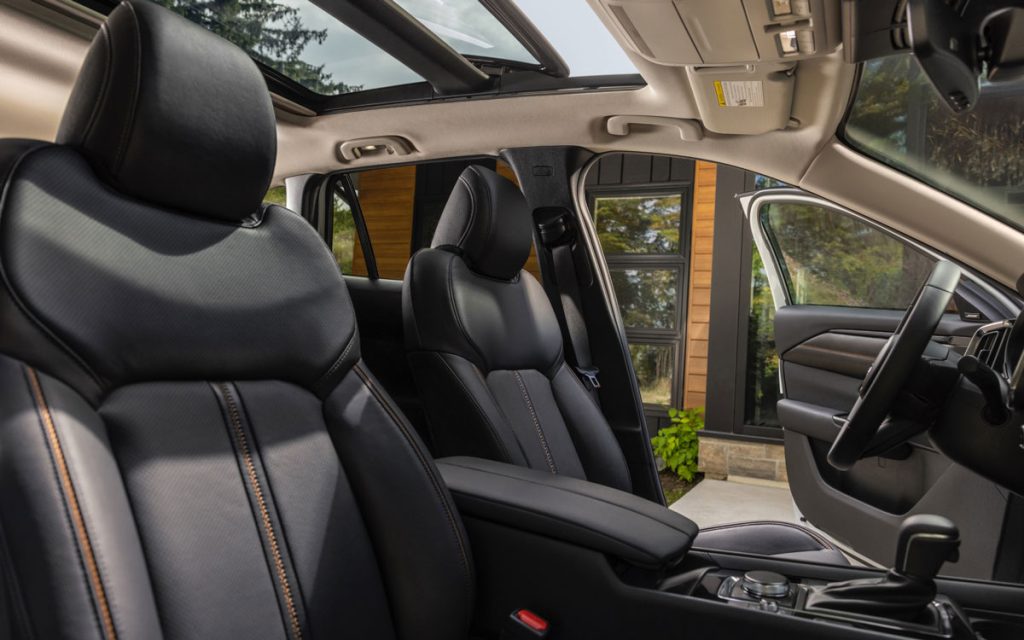
How the Mazda CX-50 Hybrid Powertrain Works in Daily Driving
How does the Mazda CX-50 Hybrid actually work in everyday driving? A full hybrid system uses both gasoline and electric power to improve efficiency without requiring the driver to plug the vehicle in. In the Mazda CX-50 Hybrid, the system pairs a 2.5 liter gasoline engine with electric motor assistance so the vehicle can rely more heavily on electric support in low speed and transitional driving, then blend gasoline and electric output as demand increases. Mazda states the CX-50 Hybrid uses a 2.5 liter four cylinder engine, three electric motors, and a total system output of up to 219 horsepower.
This matters because daily performance is not defined only by peak horsepower. It is shaped by how the vehicle responds when pulling away from a stop, creeping in traffic, or making light throttle adjustments through crowded roads. Electric motor assistance improves those moments by delivering torque early, which gives the CX-50 Hybrid a smoother, more immediate feel at lower speeds than a gas engine alone would typically provide. That does not make it behave like a turbocharged CX-50, but it does make the system feel more efficient and composed in normal commuting conditions.
The most important daily-driving changes show up in places where hybrid systems do their best work:
- Low-speed acceleration can feel smoother because electric torque arrives quickly
- Repeated slowing and starting gives the system more opportunity to recover and reuse energy
- Mixed driving allows the vehicle to blend gasoline and electric output based on demand
- The driver gets efficiency gains without changing fueling habits or charging routines
That is why the CX-50 Hybrid is not just a mileage version of the CX-50. It is a different power delivery strategy designed to make everyday motion more efficient and more controlled.
Why CX-50 Hybrid MPG and Range Change the Ownership Experience
Does the added MPG actually change what ownership feels like? Fuel economy matters most when it changes how often you need to stop, refuel, and think about fuel use during the week. Mazda rates the CX-50 Hybrid at 39 city, 37 highway, and 38 combined MPG, and Mazda also says it offers over 100 additional miles of driving range compared with the CX-50 2.5 S.
That extra range matters because it changes ownership convenience, not just spreadsheet efficiency. A hybrid range advantage means more flexibility between fill ups, less disruption during a busy week, and better efficiency in the kinds of low speed and mixed driving patterns many commuters actually experience. Around West Oʻahu, where one day may involve neighborhood driving and the next includes longer cross-island stretches, that broader range can make the CX-50 Hybrid feel easier to live with over time.
The practical ownership benefits usually show up in a few specific ways:
- Frequent in-town driving gives the hybrid system more chances to reduce fuel use
- Weekly routines can require fewer fuel stops because the vehicle travels farther on a tank
- Mixed commuting makes the combined MPG figure more relevant than highway numbers alone
- Efficiency gains are most noticeable when the route includes repeated deceleration and restart cycles
That is the difference between reading a mileage claim and understanding how it affects ownership. The CX-50 Hybrid’s advantage is not only that it uses less fuel. It is that it uses less fuel in a way many daily drivers will actually feel.
How Electric Assistance and e-AWD Shape CX-50 Hybrid Performance
A lot of shoppers researching the Mazda CX-50 Hybrid want to know whether it still feels like a capable crossover or whether efficiency takes over the entire driving experience. The answer depends on understanding how the hybrid system and e-AWD work together. e-AWD means the rear wheels are powered by an electric motor when extra traction is needed, rather than relying only on a traditional mechanical connection front to rear. Mazda identifies the CX-50 Hybrid as using an on-demand e-AWD system.
That setup matters in daily driving because traction support is not just about extreme conditions. It also affects how controlled the vehicle feels when roads are wet, when throttle is applied from a stop, or when grip changes across uneven pavement. In West Oʻahu, where rain can quickly change road feel, e-AWD gives the CX-50 Hybrid another layer of stability by allowing the system to help the rear axle when conditions call for it.
The performance character is best understood through what the driver is likely to notice:
- Electric assistance supports smoother response at lower speeds
- e-AWD adds traction support when grip changes or extra stability is needed
- Hybrid power delivery favors consistency and efficiency over dramatic surge
- The system is better evaluated by everyday composure than by raw acceleration alone
That makes the CX-50 Hybrid a strong fit for drivers who want confidence and predictability without giving up efficiency. It is not trying to mimic a turbo performance model. It is trying to deliver a more balanced form of daily responsiveness.
What Regenerative Braking and Low-Speed Operation Mean in Traffic
What does regenerative braking do, and where does the hybrid help most? Regenerative braking is the process of capturing energy during deceleration and sending it back to the hybrid battery instead of wasting that energy as heat alone. That is one of the main reasons a full hybrid can become more efficient in stop and go conditions than a comparable gas-only model. Mazda’s hybrid education materials emphasize that the CX-50 Hybrid’s efficiency gains are strongest in city driving, where its EPA city figure exceeds its highway figure.
This becomes especially relevant in daily traffic. When a vehicle slows repeatedly, the hybrid system has more opportunities to recover energy and reuse it on the next launch or low-speed cruise. That means the Mazda CX-50 Hybrid’s advantage is not only about highway distance. It is also about how efficiently it handles interruption, which is exactly what traffic introduces.
The daily benefits of regenerative braking and low-speed hybrid operation are easiest to understand this way:
- Repeated braking events help recharge the hybrid battery
- Low-speed travel allows the system to lean more on electric assistance
- Stop and go traffic becomes less wasteful than it would be in a gas-only vehicle
- Efficiency gains become more visible in everyday errands and commuting than in uninterrupted cruising
That is why hybrid shoppers should not look only at the combined MPG figure. They should look at where and how they drive, because the CX-50 Hybrid is designed to reward exactly the kinds of interruptions that define urban and suburban traffic.
Choosing the Mazda CX-50 Hybrid for Daily West Oʻahu Driving
Is the Mazda CX-50 Hybrid worth it for everyday driving in West Oʻahu? That depends on whether your routine would benefit from stronger city efficiency, added range, smoother low-speed response, and standard e-AWD traction support. Buyers who do a mix of commuting, errands, neighborhood driving, and regular wet-road driving are the most likely to feel the hybrid’s advantages day after day.
The CX-50 Hybrid tends to make the most sense for drivers who want these ownership benefits:
- Better city and mixed-driving fuel economy
- Fewer fuel stops over the course of a normal week
- More controlled low-speed power delivery in traffic
- Added traction confidence through standard e-AWD
It may be less about choosing the highest-output version of the CX-50 and more about choosing the version that best matches routine use. For a driver who values efficiency but still wants crossover utility and standard AWD support, the CX-50 Hybrid offers a practical balance. Mazda’s own positioning centers that balance around 38 combined MPG, 219 total horsepower, and greater range than comparable gas CX-50 models. For daily West Oʻahu driving, that combination matters because it speaks to how the vehicle performs in real use, not just how it looks on a spec sheet.
Connect with us


- April 2026
- March 2024
- February 2024
- December 2023
- November 2023
- October 2023
- September 2023
- August 2023
- July 2023
- June 2023
- May 2023
- April 2023
- March 2023
- February 2023
- January 2023
- December 2022
- November 2022
- October 2022
- September 2022
- August 2022
- July 2022
- June 2022
- May 2022
- April 2022
- March 2022
- February 2022
- January 2022