

Does buffing take out scratches on Mazda paint? It can reduce shallow clear coat marks, but deeper damage needs another repair path. However, a scratch may look small while still cutting through several paint layers. Therefore, the first step is identifying depth before reaching for compound or a polishing pad. Mazda paint uses layered protection, so every abrasive pass removes a tiny amount of clear coat. Because that material does not grow back, restraint matters more than aggressive correction.
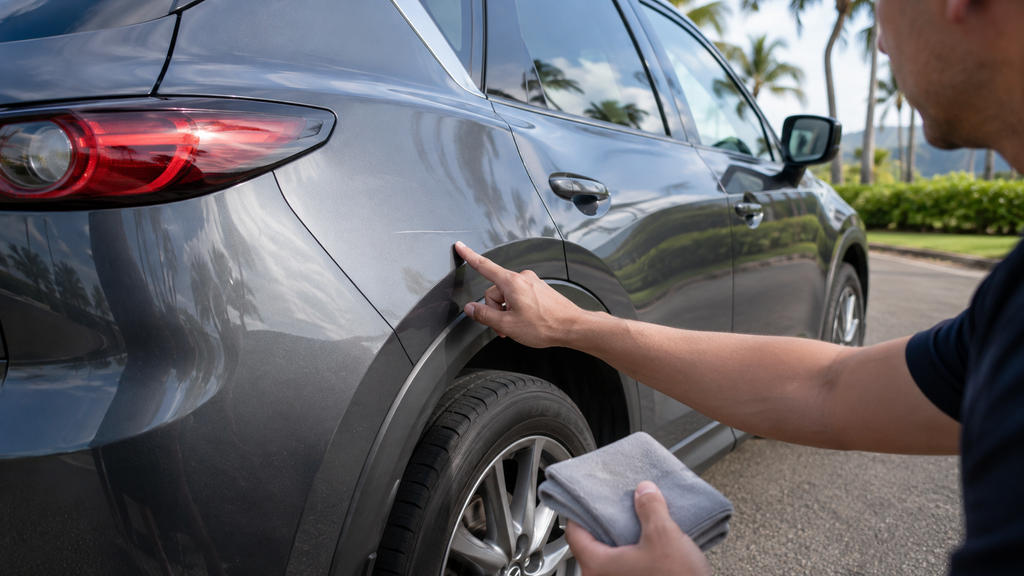
What Buffing Does to Automotive Paint
Buffing smooths a very small portion of the clear coat around a shallow scratch. It does not fill the groove with new paint. Instead, abrasive material removes microscopic high spots beside the mark. That levels reflected light across the surface and makes the scratch harder to see.
Why does that distinction matter? A deeper groove still remains after the surrounding clear coat becomes thinner. Therefore, adding more pressure cannot restore missing color or primer. It only removes more clear material near the damaged area.
In addition, Mazda exterior paint includes a clear upper layer over the colored finish. Beneath that sits primer and the panel surface. A light scratch may stay within the clear layer. However, a deeper cut can reach color, primer, or bare metal.
For this reason, does buffing take out scratches only when the damage stays shallow enough? Yes, shallow clear coat marks may respond well to correction. Deeper cuts need another repair method because the missing paint must be restored.
Does Buffing Take Out Scratches in the Clear Coat?
Buffing can reduce shallow clear coat scratches by leveling a microscopic layer around the damaged area. These marks may appear white under direct light without showing missing body color. They may also look stronger from one viewing angle and softer from another.
A clean surface matters before any judgment. Dirt, rubber, or paint from another object can sit on top of the Mazda finish. Therefore, a scuff may look severe before that transfer is removed. Gentle cleaning can reveal whether the vehicle paint itself was cut.
The fingernail test gives another clue. Run a clean nail lightly across the mark while the panel is cool and clean. If the nail glides across, the groove may remain shallow. If it catches clearly, the cut may extend beyond the upper clear layer.
Before any correction, look for several clues together:
- Check whether the Mazda body color remains visible inside the mark. Missing color points toward damage below the clear coat.
- Look for white, gray, or metallic material inside the groove after cleaning. That can signal primer or exposed panel material.
- Compare the mark under direct light and shade. Shallow clear coat scratches may change appearance as reflections move.
Because no single clue gives a complete answer, combine touch, color, and location before deciding. That approach lowers the chance of removing healthy clear coat around deeper damage.
When Is a Car Scratch Too Deep to Buff?
A scratch needs another repair method once it cuts through the clear coat into lower paint layers. Once color is missing, buffing cannot recreate it. The same rule applies when primer or bare metal appears.
Does buffing take out scratches that catch a fingernail? Sometimes a light catch can still come from upper layer damage. However, a strong catch paired with missing color usually points deeper. Therefore, the nail test should support the visual check, not replace it.
Visible primer may appear pale gray, white, or another uniform shade beneath the body color. Bare metal can look bright or dull silver. Those deeper layers need protection because the upper paint film no longer seals the panel.
A long scratch can still be shallow. By contrast, a short scratch can cut deeply. Depth matters more than length when choosing a repair path.
Once the groove reaches lower layers, polishing can make the area look uneven without fixing the missing paint. Therefore, stop before aggressive correction. Touch up paint, localized refinishing, or panel repair may be more suitable.
Why Scratch Location Changes the Risk
A shallow mark can still deserve extra caution near a panel edge or sharp body line. Clear coat thickness can vary across curved surfaces and past repair areas. Therefore, location matters alongside depth.
Why are edges more sensitive? Polishing pads contact raised lines with greater pressure in a smaller area. That can remove clear coat faster than on a broad, flat panel. In addition, repeated correction from prior detailing may leave less material than expected.
Mazda styling uses sculpted contours across doors, fenders, hoods, and quarter panels. Those shapes give the body its flowing form. However, they also create areas where machine polishing needs controlled technique.
Furthermore, past paintwork also changes the decision. A repaired panel may have a different clear coat thickness from the factory finish. Without measuring the surface, you may not know how much material remains.
For this reason, does buffing take out scratches safely near every body line? No. A mark may look shallow yet sit in a sensitive location. Professional assessment makes sense when depth, location, or prior paint history is uncertain.
What to Check Before Choosing a Repair Path
The safest decision starts with inspection, not correction. Clean the panel first, then study the mark from several angles. Moreover, good lighting can show whether the groove changes color, catches a nail, or crosses a body line.
Before touching the paint, check these points:
- Confirm whether the mark is still visible after gentle cleaning. Surface transfer may disappear without abrasive correction.
- Check whether your fingernail catches in the groove. A strong catch can indicate deeper paint loss.
- Look at the location before choosing a polishing method. Edges, sharp contours, and repaired panels deserve extra caution.
If the mark stays within the clear coat, a mild correction may reduce its appearance. However, deeper damage needs paint restoration, not more abrasion. Continuing to polish can thin the surrounding clear coat without repairing the original cut.
Does buffing take out scratches on every Mazda panel? No. The answer depends on depth, visible paint loss, panel location, and prior repair history. When those clues point deeper, professional attention protects the surrounding finish from unnecessary correction.
If you are unsure what layer the scratch reached, have the area inspected before polishing further. Cutter Waipahu Mazda offers exterior inspection and guidance for the next repair step. A careful inspection keeps a small mark from turning into a larger paint problem.
Connect with us


- August 2026
- July 2026
- June 2026
- May 2026
- April 2026
- March 2024
- February 2024
- December 2023
- November 2023
- October 2023
- September 2023
- August 2023
- July 2023
- June 2023
- May 2023
- April 2023
- March 2023
- February 2023
- January 2023
- December 2022
- November 2022
- October 2022
- September 2022
- August 2022
- July 2022
- June 2022
- May 2022
- April 2022
- March 2022
- February 2022
- January 2022